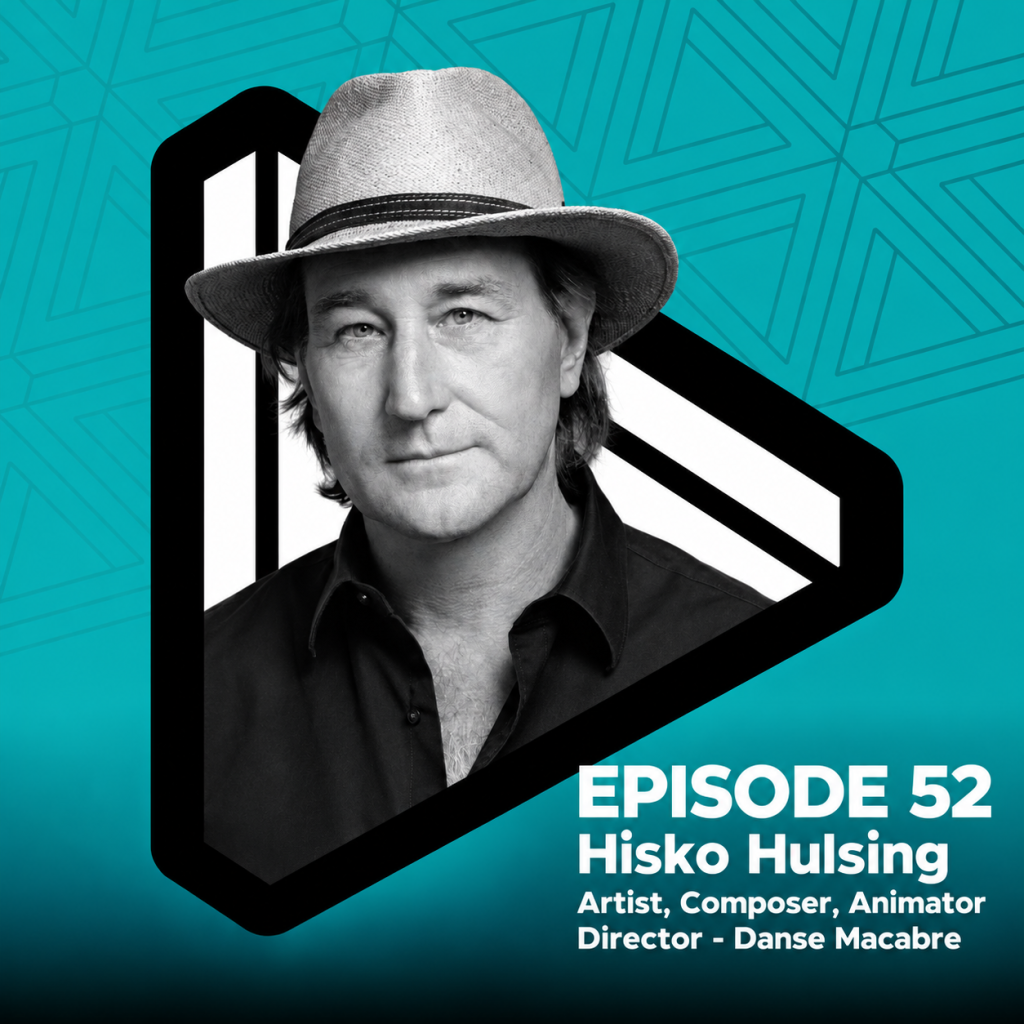
In this episode of Technically Creative, Orlando sits down with Hisko Hulsing, the Dutch artist, filmmaker and animation director behind Undone, Netflix’s The Sandman, and Danse Macabre, for a candid conversation about artistic freedom, generative AI, and the backlash against artists experimenting with new technology.
After spending 11 years creating Danse Macabre, combining 75 original oil paintings, traditional animation, and a small amount of AI-assisted style transfer, Hisko was booed at the Annecy Animation Festival and became the target of an online anti-AI campaign. Hisko shares the extraordinary craftsmanship behind the film, the personal cost of the controversy, and why he believes the anger over AI copyright, stolen training data, and disappearing creative jobs is justified, but directed at the wrong people. It’s a deeply human conversation about creativity, artistic integrity, and why silencing artists may be the worst possible response to the AI revolution.
Watch the conversation
Orlando and Hisko Explore
- Why Hisko Hulsing was booed at the Annecy Animation Festival for using AI in Danse Macabre.
- How 11 years of oil painting, traditional animation, and human craftsmanship became the center of an AI controversy.
- Why Hisko believes the fears surrounding AI copyright, stolen training data, and creative job losses are justified, but the anger is directed at the wrong people.
- How the anti-AI backlash risks driving artists and filmmakers to hide their use of emerging technology.
- Why the future of creativity depends on protecting artists' rights while allowing them the freedom to experiment with new tools.
Transcript
Read the transcript Show
Technically Creative by KoobrikLabs Podcast Transcript
Orlando (00:00) spends 11 years making a film, employs 80 people, paints 75 original oil paintings, and then uses AI for one small part of the process, is that film still AI slop? Today’s guest is Hisco Hulsing, an extraordinary Dutch artist and director who was booed offstage at the Annecy International Animation Film Festival when he premiered his wonderful film, Don’ts Macabre.
Protesters walked out, people shouted accusations about AI destroying art and taking jobs and how this was a travesty of the art of filmmaking. And what should have been the celebration of 11 years of difficult and rewarding creative work became a controversy about his use of AI. And here’s what makes this story so interesting to me is that Hisco’s an oil painter, a traditionally trained artist and animator, a…
A filmmaker who spent decades developing a distinctive visual style. For Don Smokabra alone, he created 75 original oil paintings. He worked with animators, actors, riggers, lighting artists, and production teams across multiple countries. And then he used AI for a specific purpose, to transfer the texture and appearance of his own paintings onto the traditionally animated characters. He didn’t do it to generate the story. He didn’t replace a single animator.
and he didn’t use it to avoid the very difficult work presented to him. But he did it to achieve an artistic result he’d been trying to accomplish for years, but couldn’t get to with traditional tools. And the result is genuinely extraordinary. I’ve watched this film over and over again. It’s haunting and beautiful and deeply unsettling. It’s also a film about war and authoritarianism and the way humanity seems condemned to repeat its most destructive mistakes.
And perhaps the saddest part of this whole controversy is that almost nobody was talking about any of that. They’re talking about a tool he used in a tiny part of the process. And I want to be clear, the anger surrounding AI isn’t entirely misplaced. Artists have legitimate concerns about copyright and the future of their livelihoods. But here’s the thing, Hisco gets that better than anybody.
Orlando (02:10) He’s been losing his own commercial storyboarding work to AI as well.
Orlando (02:14) So he gets it.
But there’s a difference between holding technology companies accountable for how these models were built and how they’re being used and attacking an individual artist for experimenting with a new creative technique. And I think that’s where this conversation becomes bigger than one film. Because what happens when we make artists afraid to tell us how they work? Or worse, if these artists who understand creativity best refuse to participate in this new technology,
It won’t stop the technology from developing, it’ll just develop without them. In this chat, we get into the unique and creative workflows behind Don’s macabre, Hisco’s artistic influences, the backlash at Anissey, the legitimate concerns surrounding AI, and what this moment means for the next generation of artists. But more than anything, this is a conversation about the difference between protecting art and policing artists. And whether in our determination to defend human creativity,
we might actually be discouraging the very people we should be listening to. And this is one of them. This is Hisco Holsing.
speaker-1 (03:27) Hisko Holsing, I am so excited to talk to you. We put this together quite quickly because I I saw your name, I saw what you’ve done, and I messaged you and I was just like, please let’s talk. I’m so excited to talk to you.
speaker-0 (03:38) Thank you, so nice to be here with you.
speaker-1 (03:41) I’ve been watching your work, Dance Macabra, over and over and over again since I saw it. It’s so beautiful. But Hisco, we have viewers across film, television, animation, advertising, music, and other creative stuff. I I’m fascinated by you ’cause you’re an artist, an oil painter, a storyboard artist, a comic book artist, a sometime composer, an animator. You’re all of these amazing things. how would you describe yourself?
speaker-0 (04:04) Well, I think I would describe myself as an artist. That’s the most broad way to describe what I’m doing. I don’t have a company. I’m not a producer. I got some producing credits on Undone, for instance, a series that I directed, but I’m basically kind of an all-around artist. And great thing about making animated films is that you can combine all these medians. You know, can combine sound, music, paintings, acting.
costumes, lighting, it’s like the most broad kind of art form animation, I would say. it’s a nice container for all my interests, to spend for all my obsessions, so to speak.
speaker-1 (04:48) even just looking at your screen, you’ve got these beautiful oil paintings of yours behind you. On your right side, you’ve got a digital tablet. you are literally the bridge between these two worlds. I’m a big lover of comic books, so
your work on the Sandman. I’ve seen your animated work before. I I didn’t link it to you. but I’ve I’m so impressed by your your background and and where you came to my attention was at the Annecy Film Festival your film Dance Macabre,
You do used a little bit of AI in a very structured production process that didn’t use AI for most of it. You in fact used your oil paintings as reference. But you used a little bit of AI in the end process, and protesters showed up they walked out and
And people were yelling out like this is the bastardization of art and I’m watching it going, This is one of the greatest examples of of art.
I just think it’s so beautiful. Take us through the process of of making something like Dance Macabre,
speaker-0 (05:52) I can only give a long answer to your question. When I started out in the early 90s, I was working on 35 millimeter film with cells, you know, I don’t know if you ever experienced that, but that’s that’s hell on earth. mean, there’s no even a way you can really test your animation apart from flipping or filling it. So I come from that background. my my
The basis of all my animated films are the oil paintings that you see behind me. I made at least 400 of them. And then the hard thing in animation is how do you match the moving characters that are animated? In the beginning, I animated them with a pencil on paper. How do you match them with the paintings, the backgrounds? So every time there was a new technological advancement, I would find out if I could use that for my films.
get the characters, the moving parts and my backgrounds feel more like one cohesive world. So I’ve always sort of combined this, my very classical painting techniques, know, the 17th century kind of painting with the most modern techniques like projection mapping, for instance, 3D animation. And for this film,
When I started 11 years ago, I started storyboarding the film. Then I started making the paintings. And usually when you make an animated film, you leave out the characters because the characters will be animated. But I can feel fed up of the fact that I made so many paintings that I really love, but the subject is always missing. The other said, because they are background paintings. So the subject is animated and I have all these beautiful paintings and there’s nobody in them.
Edward Hopper, but even lonelier lonelier than Edward Hopper because. So I started painting the characters in with the idea that I had no clue how I would animate them. But I thought if you look behind me, those skeletons, they have to look like that when I when we animate it. And that was 10 years ago when I made this painting. We then did a test with projection mapping.
Projection mapping means that you use textures, or this case a painting, and you project it on top of 3D areas. Usually that works, for instance in Undone we did it a lot, also in Dream of a Thousand Cats for the Sad Man for Netflix. But in this case, with characters it doesn’t really work. It tends to look like game figures or something. So I didn’t really like it. And it was also extremely expensive to do it. It was just not the right way.
Then I was asked to direct Undone and a Dream of a Douse of Cats, the Sandman episode. And when I came back, I started working on it again. And I figured out, like, because there are different ways to make the 3D characters look painted. One of them is using shaders in a program like Blender or Maya. But those are a little bit fake to me. I don’t really like them. They look sort of painterly, but in a Photoshop kind of way. well, and then I met a guy who was
working with Comfy UI, which is a very, I would say it was a very crude early AI tool two and a years ago. And I just thought that what if we program our own shaders and we feed the machine, the beast with my paintings and see if we can make this 3D animation that is completely animated by artists and in Blender and Houdini.
and give it that texture so that it looks like my paintings. so that took a long, by the way, this answer is way too long.
speaker-1 (09:46) Please. No, no, no. Absolutely. This is this is what we’re here for, is to find out how you did this. I mean, it’s it’s so great. I mean, I’m you know, we’re gonna put a link to it in the bottom of the show notes. Like I want people to watch it and be fascinated by this is okay perfect. Please keep going.
speaker-0 (10:02) Okay, then I’ll move on. Okay, so the hard thing, so first I have to stress that on Dance Macabre, there are 80 people, 80, 80 people on the end credits, of which about 30 animators, sliders, riggers, et cetera. Then there’s of course the actors, because we also shot live action as a reference. I always edit everything in live action, so we have reference for the animators, so they know how a violin player moves his fingers.
how a soldier walks, all those kind of things.
speaker-1 (10:34) I mean mo so many animation projects don’t use actors. I mean you know, it it seems like you did everything right. You used actor animators.
speaker-0 (10:41) Of course.
speaker-1 (10:43) Yeah, exactly.
speaker-0 (10:44) And also the reason to shoot live action first is that I noticed that when I edit live action, I can make such fluid edits, you know, and then the films already when that edit is done based on the animatic that I met 10 years ago, which is also online, by the way, then I just know that it’s going to work out because I already edited live action. And I think that’s the problem with a lot of animated films that they rely too much on the storyboards and then they find out it’s not really
The stories are moving forward very fluidly. Anyhow, we started experimenting and it was extremely difficult, I can tell you that. So all those people online also, I’m being attacked daily by hundreds of people calling me an AI clown or things like that. They have no fucking idea what they’re talking about. can tell you that. It was so hard. It was the hardest thing I ever did in my life, actually. And I was not even doing it myself, I was working together with somebody. So the thing is,
with those programs like ConfUI and StableDiffusion and all those things animated, every image is built up out of noise. So there’s noise. And then we fed all the, in ControlNet, which is another module, so to speak, we fed all the facets of the 3D animation from Blender. So the depth map, the crypto map, the normal map, the beauty.
We fed them into this system to give the system as much information as possible. That’s step number one. Then we had a model that we trained on my paintings. And then there are all kinds of different ways to generate it to come to a picture that looks painted. The problem is, it’s like riding a beast. The more you let it go, the more it looked like my paintings and the more ice came out of skulls because it’s one big hallucination machine.
You know what mean? It’s to do with intelligence. It’s just one big hallucination machine. then if you didn’t give it enough freedom, it would just look like 3D animation which didn’t fit with my painting. So there was always, it was also a matter of finding this sweet spot where it looked painted, but where it still had some errors that I would then retouch in a traditional 2D program, TV paint. So that was what we ended up with.
but to get there was extremely difficult. And the first test was really successful. It looked wonderful. And then the producers, because it’s a co-production with four countries, Netherlands, Belgium, France, Hungary, they were skeptical for good reasons. They said, well, we don’t think it can be done like this with this AI tool to create pictures for animation. Let’s take a more difficult scene. And I made a mistake because it
I took the most difficult scene that is in the whole film. It turned out to be the last scene we finished, actually. So hard, it? So was very hard to convince people. And it’s now the scene that all those, not trolls, sorry, investigators on internet are scrutinizing. look, there is 10 thieves and then the skeleton has nine thieves in the next one. Yeah, that’s because it’s so fucking hard. So when I would touch those images, I would just…
make a decision, pick my battles. Will this be visible, this error in Edge Wars Viewing? Yes or no? No, then I would leave it like that. So it’s a very hard process. And then I have to also stress that almost every shot needed a different approach. And the good thing about, there’s a lot of things that might not be good about stable diffusion that I might not have realized fast enough. But one of the good things, it’s an open, free.
program and it’s open source. So you can program and also in computer UI. So we were programming, or not we, but my partner, he was programming stuff to make things possible. So for instance, if there were four skeletons on a horse and they all fall off the horse, there’s no way you can render that 3D animation in one part. You have to do the head of the horse, you have to do the head of the skeleton. And I would then…
have to stitch all those parts together in TV paint because I was my own intern. I didn’t have an intern. was doing all the work myself, apart from making 75 huge oil paintings and direct, et cetera, et cetera. Not to brag, but it was just a hell of a job. But this was before AI slop. So now people think, I can use a prompt and there’s four skeletons falling off a horse. That’s not how we worked. So I was kind of unfortunate in a way.
speaker-1 (15:23) that is the classic AI learning curve, isn’t it? It’s very easy to get a keyframe out. It’s very easy to get reference materials that help you sell the eventual product. But actually you using it in the eventual product is not very easy at all. I mean, it’s
speaker-0 (15:40) It’s
speaker-1 (15:41) you know, it’s so much iteration.
It’s so much working with traditional tools. You mentioned Maya. I mean like
speaker-0 (15:47) Well, this is Blender.
speaker-1 (15:48) Well,
Blender, yeah. I think that what people don’t understand is fine, you you trained a model on your own oil painting, so the provenance of the of the source data is yours as well But I think that what people don’t realize as well is that in Blender, in all of the tools everybody uses on a daily basis, Adobe Firefly and things like that, AI is injected into these tools anyway now.
Whether it’s usable or not, I mean it’s it’s it’s almost gonna be impossible to make a film without AI, not because people are using it as slot merchants, but because it’s in everything there.
speaker-0 (16:21) I’ve
seen everything. Yeah. And that’s the frustrating thing of in the beginning when I started getting attacked on internet, I was still trying to give very detailed answers to questions. But at some point I found out that it didn’t help because people, a lot of people are so anti AI, they don’t, they don’t listen to that. I would tell them things like, well, listen, you’re attacking me on Instagram. That’s a fully AI powered medium, you know, it’s meta.
justice face, it’s all AI powers. And of course, that’s not a good argument. It’s like, but it is true. And the thing is, you know, a lot of those tools are very, they’re very good for productions because for us in Photoshop, first, when I had to retouch those, because I had to get the characters out of my paintings so I could use the paintings as a background before the animation. So doing that in the old days was using clone stamp, et cetera.
And now you just select it. like a year ago, when I would select it and generate the selection, it would look horrible, like a very bad clipper. And now when I do it, it looks like my painting. it’s scary, but it also helps me a lot in the production, especially because I’m just, I’m an independent artist. don’t have, I mean, we had a budget, of course, for film, but I don’t have the tools that Disney had or the budget or anything.
So those kind of tools help me make my film. And then for instance, I am a big fan of Da Vinci Resolve. Do you know it? Yeah.
speaker-1 (17:53) yes of course.
speaker-0 (17:54) Jesus, man. That’s completely, I’ve been working with it for a year. It’s insane how much that program can do. mean, it’s like a After Effects premiere and it’s everything in one program for only 300 years. So I’m not getting paid for this information.
It is. really enthusiastic. And we did color grading and it was a tool with which we could select a moving skeleton to grade it. And it was an AI tool and that saves us two hours of work. And the color grader is not complaining because he can use the tool. So the thing is, it’s everywhere. The thing we should talk about is the fact that all AI software, all AI applications that are being
developed and used by all the companies, not all the companies, but by most companies in the world. It’s all based on stolen data. So the thing is I’m being attacked for it for using stable diffusion because stable diffusion, the data sets are, the data comes from basically it’s all.
speaker-1 (19:03) Solen. I mean, yeah, exactly.
speaker-0 (19:05) Well, yeah.
But that goes for all AI, also the AI that’s fault of everything. know because one of my best friends sold his AI company. So I have some good information about that. So the thing is, copyright is a big issue and there should be great regulations for it. There should be legislation. The question is, am I the one to attack before this legislation is there or?
Should it just be, I mean, I didn’t do anything illegal. So what I think this model would be is that the old tech companies who develop AI will have to pay a bit back to the people that they got the data.
speaker-1 (19:46) Yeah.
and you’re talking about the the fair use argument, which I’ve I’ve kind of said multiple times on the podcast, I don’t agree with, my mom was a writer and all of her books were in the books three corpus that was used as training data. I think she would have been furious about that. But I think that you know, I think that you’re right. I think that the you know, you very generously called the trolls, you stopped yourself from calling them trolls, and then you called them investigators.
Yeah, but I think that’s too generous. Because if they investigated and just went to your making of video, it would
speaker-0 (20:15) Thank
speaker-1 (20:16) be incredibly clear. And either the s the people yelling out, This is a bastardization of film and of art, either they don’t know enough about film to be able to watch the the making of and go, I see. There was a lot of traditional work done here, not to mention
I don’t know a lot of oil painters. And and the ones I do know aren’t very good. And so, you know, the fact that you have an undeniable craft, an undeniable ability to to to make these beautiful things that are already sitting behind you. I find that that the conversation around slop usually devolves to either it’s removing jobs or it’s lazy. And I think that what’s so evident looking at the what you’ve done.
Is that you created jobs, which is not easy on a short film. I mean, most people who do short films are making it for zero money. And so to have to have had lots of people work on it, be credited on it, and then as well to be using, actors and using things that that even animations don’t usually do.
speaker-0 (21:23) I’d say.
speaker-1 (21:24) It’s a high degree of specificity. It’s using professionals, and in terms of it being lazy or you
being a slot merchant, I mean you’d only have to look at the oil paintings behind you to see that that’s just not
speaker-0 (21:36) True. And no, that’s also, you know, I was so what happened in on the sea was that it was an organized protest. It’s not being claimed by any terrorist, jihadist group or anything. But I know that because there were people that I knew were sitting there and they said people were gesturing them to get up, you know, and people were walking out before my film started. Yeah. So and then when they all started to boo, this woman started yelling at me that fuck you. And I was taking our jobs and I yelled back.
that actually 80 people worked on this film. And she was yelling this while the end credits were going on the screen. Like, he’s too confused. And then, but
speaker-1 (22:15) There it is.
speaker-0 (22:17) the people couldn’t hear it because they were shouting so hard. that sort of, you know, and you wouldn’t hear anything anymore. And then they started doing again. And I got up and I said, thank you. And then I raised my middle finger. And that was maybe not smart. I don’t know, but I raised my middle finger.
Because they went in there, not doing any research on my film. could have, before they started, they decided to go with this mob action. They could have looked up my name, Hisco Holstein, one minute on Google, you know I’m a craft and I have a large history of doing whether you liked or not. It’s a different story. And maybe they hate my films, but I’m not exactly lazy. would say that.
Like I usually work seven, I don’t even have to apologize. I mean, it’s cool.
speaker-1 (23:06) I I think that this is what what’s so tricky about this this moment is you were incredibly transparent right up front.
what went into it, that it took eleven years, and you’ve been working on these paintings for such a long time. And in y the people you hired and the people you worked with and all of the traditional processes, like you said, riggers and lighters and 3D artists and and then as well, you’ve trained fine, a off-the-shelf model that with dubious copyright provenance, fine. But then you you locally train you fine-tuned it on your own work, your own hand and your own brush strokes.
The fact that you were honest about that, I feel should have shielded you from that thing. But yet it doesn’t matter. It’s like a five year old with their fingers in their ears going, No, no, no, no, I can’t hear you, I can’t hear you. You know, it’s it’s it’s childish. And then it brings out the childishness in us where you’re going like, I shouldn’t have done that. But it’s like
You’re not listening to me. I’m not being listened to. I’ve done everything I possibly can to explain it to you idiots. You know, like it’s hard. I I don’t I don’t know how you get out of it, you know? We’re all human at the end of the day.
speaker-0 (24:18) Well, no, there was no other way I could do it also I I grew up during punk and I there’s still a little punk in me and I have to you once while But Yeah
speaker-1 (24:27) There’s a mohawk on under that
speaker-0 (24:36) No, it’s good mentality not to give too much fucks about things like this. I have cried. I was very sad. mean, it was the world premiere of my film and it’s the best thing I ever did in my view and then get that response for for what, you know, but the other thing that I would like to say is that they’re not doing themselves a favor. Why not? First of all, they’re protesting me so hard, attacking me so hard like
thousands of people, fuck, he’s going use AI as well. I know that a lot of people in the industry and a lot of my colleague, let’s say, directors who told me on NSC that they’re all using AI in one form or the other. Yeah. But so what happened now is that people will think twice before they’ll be honest about it. Yeah. Because they might get the same attack as I did. So how is that helping any discussion?
It’s not helping it because people will do it anyhow and they will just not talk about it. That’s one reason why it’s very bad if you want to take an action or undertake action to get legislation done or things like that. You have to be more. You have to get into discussion. You have to discuss with me. And nobody came up to me to discuss with me. They were just saying boo. And in the days after, nobody came up to me. So it’s very weak, very weak and very damaging for my film, but also for their own cause. Then the other thing
find this even more important is that that’s what I said. It was a Q &A the day after. And there were some really nuanced questions from young, worried people, which I completely understand. As I just told you before you started recording, I worked for 120 advertising agencies as a storyboard artist because one day a week of storyboarding bought my freedom for six days to make my art and my films. That was my whole concept. That storyboarding work is now
completely gone because art directors are using AI. So I know it’s taking away jobs. That being said, if you’re now a student, an animation student, and you’re on an art academy or whatever, and you’re like, AI is the devil, don’t touch it. If you touch it, I burn you. Chances will be that you will never get a job because in two years now, when people are looking for artists, they will need an animator, whatever, a rigger, whatever.
And they will also ask you, can you also use some AI tools or whatever, because it will be part of the industry. I’ve seen it, because I’m so old, I’m 54 years old, and I started with 35 millimeter film, I saw all those steps where everybody like, the first time, when I was still in academy. exactly. When I was still in the academy, art academy, I knew somebody far away and he had a Commodore Amiga.
computer and they had this uncle take you a two bits program where you can film your drawings and you could sort of vaguely see how it was moving. So I use it to test my animation and my teachers and art academy said, no, don’t use the computer. It make your animation look dead. know, and that was before windows 95. And then so, and then when it was 95 came into the world and suddenly I had a 18 million.
colleagues because everybody was using flesh because they could use the training which also a first sort of first tool which you could use could called cheating actually because I was drawing it very very so I’ve seen all and then the 3d animation I was also one of the people who didn’t really like the look of most 3d animation in beginning apart from our story and those kind of really good films so I’m I’ve seen all the stuff everybody’s against
And I do think that AI is different in that way. It’s way more threatening because it’s so unpredictable what it will replace. I understand the fears. The question is, am I the right target? An artist, independent artist who used like 2 % of the whole process to give the 3D animation a certain look that I couldn’t do with Blender. That’s all we did. Yeah.
speaker-1 (28:46) attacking a short film also seems crazy. I mean, like, short films are not money generating machines. And you know, like I mean it’s not like
speaker-0 (28:54) No, I’m
years uncapped actually after this film. And then boomy for what? You know, it’s crazy. And also why aren’t they just going to the offices of OpenAI and Google and Meta and people like, you know, mean, the owner of X. people are, some of them are really dangerous, you know, and they should be fought, not an artist.
who is using his own artwork to train a model, to make a short artistic film with a very important message also. I my film is, that’s the whole tragedy about what happened till now, because it’s just, premiere was just two weeks ago. So I don’t know if this has been broadcast, maybe something completely over that. But right now, there was not, nobody, almost nobody talked about the content of the
And that is very sad because when I started the film, can I, is it okay if I talk about it?
speaker-1 (29:52) Of course, please. Yeah, because I mean I I think that you’re right. Like it’s it’s such a haunting film, especially with everything that’s going on around the world right now. We’re watching wars happen so often now on the news. We’ve become very desensitized. I remember watching, you know, the war that happened when I was at college, and there was a news item where a car was driving down the street and then it exploded.
Everybody I was watching it with, because we were all college kids and we were all just standing around kind of watching the news. I went, my God. Like they just showed somebody die like that that wasn’t just a car that blew up. There were people in the and
speaker-0 (30:32) Yeah
speaker-1 (30:33) that was on the news. And that’s what’s so haunting about your film is it it does
the the death comes into homes and it’s very it’s quite hard to watch on that level. And you’re right, that should be the commentary that is coming out of this, not that, AI was used to texturize some of the back end of this after it was made by a bunch of artists. you know, it’s it’s it’s sad to see that. you know, how do you how does that make you feel?
speaker-0 (31:01) It’s
so bizarre that I don’t have… Somehow I’m very relaxed about it because I think that once this storm has gone down, people will watch the film the way it was meant to be. And as you say yourself, I had the same experience as I showed it to just a guy from the street. he started crying. He got wet eyes when he saw my film. I asked him, how come? And he said, well, the thing is…
We see, as you just explained, we see so many of these horrible pictures that we almost get numb to it. It’s like this endless stream of misery that we see and we sort of shut off. know, we create this unconsciously, we’re creating this harness. And when you make a film like this, you’re showing a different window on the same, like a different view on the same thing. it gets in. And also the music is very strong, of course, that helps a lot too. So that was how I
wanted the film to be. And I started working on the film in 2000, I think 2015 or 2014 when Russia invaded Crimea. Yeah. And I was shocked that in Europe, hardly anyone was really responding. The most political leaders said something like, well, thoughts and prayers, you know, what they do in the United States when there’s a school shooting like we’re going to do it. We’re with you. And then started following what was happening in Russia. And I could see that
Russia was actually militarizing and Putin clearly wants to have his empire back, maybe not completely the Soviet Union. And so I saw it as a resurrection of fascism. And that was the first title of my film. It was called Resurrection. Now it’s called Dansk Makab. And then what happened is they started interfering with all kinds of elections. And suddenly there was a leader in the United States who had the same kind of slogan like make
make America great again. And this whole wave of populism that that flood the world. that I mean, I started the film because before all this happened, I’m not saying I’m a prophet or anything, but I can see it on me. It was there in the air, you know, and now the film is finished and it almost looks like a commentary on what’s happening now with the horrible war in Ukraine and America attacking Iran and and what’s happening in Gaza.
But the thing is, I’ve tried to make film in a way that it doesn’t depict a specific city or place on earth. could be anywhere.
speaker-1 (33:39) Well, also you started making it eleven years ago. It’s an interesting commentary on how how we haven’t come very far.
speaker-0 (33:46) We’re worse at this moment, we’re worse because at least, I mean, the people now that are in charge in a lot of countries have this. So I don’t believe that an apocalypse is coming. So it’s a very apocalyptic film. But what I’m afraid of is the people that are in power and that also some of them own those AI companies that have apocalyptic vision about the world. Like we have to fight this holy war in the Middle East. Those kind of very dangerous ideas.
That’s why I use a lot of, let’s say, religious imagery in my film in the beginning to explain that, that it’s almost like a religious thing to start these kinds of wars. I mean, I think the Ukrainians should fully defend themselves. I’m not a pacifist in that way. But people like Putin and others that are just invading countries, killing people for some very strange…
Power game is something I think is scary.
speaker-1 (34:45) Did you begin? You started creating these incredible oil paintings. What was the first painting? What was the first thought? Like talk to me about the inspiration that that got you to to commit to an eleven year journey. I mean, it’s it’s incredible.
speaker-0 (35:00) Well, inspiration is 100 % comes from Dimitri Shostakovich, the composer of the music. So I heard his music when I was about 20 or something, 21. And I already saw these clear images in my mind when I hear the music. I’m a big fan of Shostakovich. My wife is a violin player. My son is a violin player. I’m drained in music, know. Drenched? I don’t know what to write. Not a native speaker, sorry. Drenched!
Drinks, not drinks, music. And the interesting thing about Shostakovich is that his whole career took place under communism during the Stalin years for the largest part. And in the 30s, that was a period where millions of people in Russia got deported, tortured, killed by Stalin. It was called the Great Terror. Shostakovich would sleep in his bed fully clothed.
with his suitcase, all his belongings next to him, because he was convinced that he, like his friends, be, during the night he would be arrested. So the interesting thing about Shostakovich is that he always had to sort of, there’s a lot of dark layers in his music. It’s clearly about dark shit going on in Soviet Union, but he also had to make sure that he didn’t get arrested and that he could sort of, so there’s always this, that he could sort of,
Let’s say that the communist party
speaker-1 (36:30) Plausible deniability, you know, like there was you know, it was a subtext.
speaker-0 (36:34) Yeah. And so there’s always these layers in his music, these ambiguous layers. And I found it extremely inspiring for this film. And the other thing is, and I found out much later when their storyboard was already done, that this exact piece of music, this for now piece of music was actually seen by many as a terrifying portrait of Joseph Stalin himself, because he
He wrote it just after Stalin died. I didn’t know that, if I would have known, it would even make me feel more convinced of what I was doing. This is about the kind of, well, let’s call them authoritarian terror regimes, terroristic regimes, state terror, I would say. That’s the base of the film. So the music is the base of the film. I would sit here, listen to the music. Nobody on this planet listened to that piece of music more than I did.
I’m 100 % sure. I must have listened to it like 4,000 times or something. Because listen to it, come up, see what ideas it brought to me, just based on music. Also, I felt confident about that because I did compose orchestral music for two of my films. I’m not saying I’m a good composer or anything, but I have a good sense of music and what it might mean. But I would make those drawings pretty detailed because I knew that the drawings might give me…
I knew ideas for other stories. And at the same time, I had to think about the structure of the whole film. And that was a difficult thing because it’s just a four and a half minute piece of music. There’s no three act structure there, even though I just noticed that I did put in a three act structure, but without really real. Yeah, there is a word actually. I didn’t realize it, that’s how it goes. But the problem was the big climax in the music is after two minutes. And I already had this bomb explosion.
Yeah. And then where to go from there? I already blew up the whole world, you know, my story. I was stuck for months and months, complete blackout. I I mean, I had ideas, but they didn’t really help my story until my producers, then producers from the last. They said, here’s what do you do? We have to deliver the stories in two weeks at the film fund and suddenly move something. mean, June, it’s so crazy.
speaker-1 (38:58) Last
minute panic is a really good inspiration, isn’t it?
speaker-0 (39:03) Exactly. I saw Paul McCartney saying this in this Peter Jackson film, Get Back, did you see it on Disney Plus? Yeah. Where he says, well, this last performance there on the roof and he says, well, we always perform the best when we’re with our backs against the wall, you know? And that was how I experienced it. Yeah. So it all comes from the music and also there’s a lot of ideas and layers in the film that come from philosophers that I read.
while I was storyboarding it that are about, for instance, like this huge chimpanzee monkey destroying a whole town, which leads to the bomb explosion. It’s sort of my comment on the fact that we’re primates with very destructive technology. We’re still kind of primates. And it has just been proved by all the trolls in the last week. mean, Jesus Christ.
speaker-1 (39:56) you’ve done all these tremendous paintings, you then sell it through to the I think the Nezu Netherlands Film Commission was first, right? Yeah. and then you got buy-in from from other countries and film commissions. that that provided you the funded to go ahead with the animation. Yes. The comfy UI and the AI part of it, is that something that came after you started production?
Or was it the introduction of the AI that allowed it to be done for a price that meant that the money that you were being given was actually going to make it work?
speaker-0 (40:28) It was an entirely creative decision. I saw that’s the unfair thing that people on internet say that I did it to save money or to save work. That’s absolutely not true. The only thing was that I saw something that has never, I saw that we could do something that has never been done before in history. that’s, so my whole career in animation is this journey into make sure that the animation.
is integrated in the painting. this was a way you can do it. could, in theory, like the Vincent, loving Vincent film, you could have 200 painters that painted frame by frame. That’s possible with Van Gogh, as we say, this Dutch artist. Van Gogh, Van Gogh style. You can do it because it’s quite, it’s a simplified style. With this kind of 17th century, it’s just not possible. have nothing, even if you…
would hire a whole country. It’s just not possible. So this was my way to make sure that the whole film looked like the paintings that are the basis of the film, which are all in the film. That’s something that also people forget is that only the moving objects have gone through this style transfer, as we call it. So it was never to save money. And we started developing this technique before we started to get into production. And the other studios were very skeptical about it.
And I just, and when people tell me I can’t do something and I get extra, you know, motivated to prove them wrong. And then we did prove them wrong. And that’s what we did. But I’m, I didn’t, the thing is, I just worked with one guy on this style transfer, one artist who is an animator himself and a painter. He should get all the credits, but he wants to
stay out of the spotlight for.
speaker-1 (42:24) Yeah, I can imagine. Yeah, as you’re getting Exactly.
speaker-0 (42:30) bullets.
speaker-1 (42:32) You’re getting arrows to the chest. I’m I’m sure he’s very keen to stay in the background. but he did a tremendous job. I mean, I think that’s the thing. So how was the handover between the traditional animators? ‘Cause I’ve seen in your making of video there’s there’s beautiful imagery of, the skeleton going over somebody’s balcony and into their house and
that that seems to be rigging and and and and traditional animation. And then they’re doing that it’s not. That’s Yes
speaker-0 (43:01) It’s all traditional animation.
speaker-1 (43:03) exactly. Where does the handover happen between the traditional animation and then the the AI stylistic skinning?
speaker-0 (43:12) What happens is they had my, either my layout, my 2D layout or my painting, because I was still painting while we were in production. And then the first step would be that somebody from Op Tour du Menui, a French studio, or Gauche Chang, was a studio in Africa, actually, in La Réunion. They would make a 3D layout that I had to approve. We used Kitsu. don’t know if you know Kitsu. It’s kind of online platform like…
It used to be shotgun or shot grid, it’s something like that for free. So everybody just puts on their animation there and I approve or I give notes, you know, and I’m very precise because a 3D layout has to fit with my painting, prospectively, et cetera, and exact positioning of character. Then an animator would animate the 3D skeleton or whatever object there was or a tank until I was happy with it.
And they were all, I mean, everybody did such fantastic work because I think at some point people felt that this was going to be something special and then people are getting really motivated, you know? And that 3D animation would be lit also. So that’s another piece of misinformation that I see now on Instagram sites where people say I use the AI to light anything. We didn’t light anything with AI. It’s complete bullshit. We were, the animation was…
speaker-1 (44:37) It
really just the texturing. It was it was trying to bring it was trying to transfer the the hard hand work that you did onto the the film.
speaker-0 (44:47) In a way, it’s just that, yeah, that’s it. It’s very simple. So everything is done actually. And then we have this style transfer. So the French studio, they suggested to use shaders in Blender. I just didn’t like them. That’s the problem. So that’s why we did this. It’s very simple. It’s actually, so simple that the whole controversy right now feels so ridiculous.
So that I’m, I mean, of course I have been sad after all the booing and all the attacks on Instagram, et cetera. But I am pretty relaxed about it because I didn’t do anything wrong. And I’m actually very proud of what we did. And I think my partner should get a medal for what he did. It’s so incredible how he made this possible, you know? Yeah.
speaker-1 (45:41) I saw that the the head of the Anasty Film Festival spoke out and said, I think the way the protests are happening is wrong. Sorry.
speaker-0 (45:48) You said it was a witch hunt, actually.
speaker-1 (45:50) Yes, exactly. I mean he was he was very supportive and
speaker-0 (45:53) Yes. No, not only he. So that’s the other sad thing for the protesters is that I went to an Academy party at NSC where there were a lot of Academy members. A lot of them know my work. they said they couldn’t believe what they had witnessed. said, yeah, it’s such a beautiful film. It’s so disgusting what happened. And so I get a lot of support from people that matter to me at least or that I respect, you know, and the direct festival.
He came up to me three times actually. He comforted me.
just after the discreet dig. yeah, and he, sorry. I again. please. He comforted me and he said he would release a press statement and he did so. And he said, well, he’s also respected artist and it’s wrong to attack him for like exploring new ways or for experimenting. Yeah. And I was very happy with the statement. The only thing is every time
something like this happens, there’s a new eruption of hate. So now I want to, I mean, this will be streamed much later, many weeks from now. But right now I don’t want to respond to anything anymore. It’s just…
speaker-1 (47:13) I was at a closed door meeting at a studio, and I won’t mention which one, but they said everybody says they hate AI, but everybody comes back from the bathroom with really good ideas.
There’s this level of hypocrisy and ignorance surrounding the whole thing. And and to be honest, I actually see a lot of people who I wish were leaders in AI, like people who have worked at great advertising agencies or been artists or whatever else. You as a as a as an oil painter and and who’s traditionally trained, you know, saying, I’m gonna pick it up and see what’s happening with this and see how it can help me.
Transfer my art into a different medium, which is that’s what it is. You started in one medium, the the canvas, and you’re moving into expressing yourself in a different medium. And you want that to be as seamless and as reflective of your artistic choice as possible. That’s a good thing. And people like you coming forward and using it and saying that you’re not embarrassed about it, and I think is what’s required. Because I see so many people who are traditional artists going.
This is disgusting and I’m not gonna use it and I don’t think anybody should use it. I’m like Yeah, the problem with that is I’m seeing people who are doing very bad work, who have never done anything else before, getting applauded at AI festivals and and things like that because the AI crowd like, my god, you did something and and it’s like, Well, it’s not good, you know.
They’re very often the only ones doing it. They’re the only ones learning at the moment. And so I I think it’s fantastic that you’re out front.
speaker-0 (48:53) thanks so much. Yeah. And I think that’s where the confusion comes from is that the first thing that happened to me is I think one and a half year ago or something, was on an animated festival and I showed some of my paintings on my phone and some people said, is it AI? What? Well, why would it be AI? You can see now it’s not AI, but I mean, showed on your phone that that confusion started then already. Yeah. So for instance, people on Instagram or Reddit
who say like, look at the headlights of that painting. They don’t make sense. Must be AI. And my reply is, I’m just very bad at painting cars.
speaker-1 (49:34) Ha ha ha.
speaker-0 (49:36) I can show it to And then, the eyes of the muses, I call them, In my film, there’s this army of, let’s say, the death from maybe previous wars or…
whatever it is, or maybe old ideas like Make Russia Great Again. And they’re being led by these sort of utopian muses or angel-like figures. So when we first had got in the animation from Hungary, from the Hungarian studio, the muses looked too cute. And my worry was that people would think that those muses are leading this army to some right cause. I want to make sure that people understand that these muses are
Yes, they’re like the propaganda, the propagandists that lead the army to full destruction and to attack humanity as a whole. That’s what my film is about. So I had to make them more creepy. So I did that frame by frame in TV pays. I painted it. Sometimes copy, paste and stuff or whatever, all the tools I could use. people, a lot of people pointed that out to see it. Damn, you can see it’s AI. It’s not. I made it. So people are very confused and they…
And especially because my film looks so detailed or something or so like, that was my mother told me to comfort me. She said, looks so good that people can believe it’s done by Unibu.
speaker-1 (51:04) But she’s right. I’m I’m not your mother and I’m not part of you know a family member. And it’s true. It looks so, so good. when you look when you look at an animation come together and you see storyboards, and then storyboards go to rigging, and rigging goes to texturing, and texturing goes to lighting, and that
you’re always having to fill a gap in your mind. And I was shocked at how impressive each stage looked. people were doing that with Rembrandt on his gold and his water. people used to get up close to the painting and go, How does he make the the metal look so good? is he using gold leaf? Is he not using gold leaf?
Yeah. And of course he wasn’t. He was just using lighting techniques. And that’s always been it used to be the joy of art. Now it seems that it’s the something that people pick apart a as a big negative. and I I think it’s very sad to see.
speaker-0 (51:56) Yeah, and the strange thing, I mean, with Rembrandt in a way it was different because it was really all suggestion created with paint and there was no real gold leaves in it or anything. and then, but with the invention of film, there was always some new development that people would reject, even sound. When sound entered the cinema, people rejected it.
And while you know the story about the Luddites and the people who started building the weaving machines,
speaker-1 (52:30) Yeah, yeah, yeah.
speaker-0 (52:32) apart from film, sorry, I’m a bit messy.
speaker-1 (52:34) Of course.
speaker-0 (52:35) Yeah.
speaker-1 (52:37) Yeah.
speaker-0 (52:40) And photography is a good example because people expected the art to die, the painting art, and it exploded after that in a different way.
speaker-1 (52:50) If
yeah, Impressionism began, you know. I’m not gonna do a bowl of fruit. There doesn’t seem much point.
speaker-0 (52:57) Exactly.
Yeah. that was an unpredictable thing that happened. And when you look back, it looks predictable, but it was not predictable. we can predict what AI is going to do. But one thing that’s not being taught. I mean, I have to say one more thing. Sorry, this is my mind going all over the
speaker-1 (53:16) Go for it, please.
speaker-0 (53:17) place. OK. Well, first of all, it’s not I don’t like working with AI.
Over a stable diffuser, ConfUI. That’s the thing. I really love painting. I enjoy it so much. I use ConfUI and Confusion to get to a certain goal. that’s sort of the almost tragedy of making animated films is that there’s a lot of hard work in it. I mean, when I made my first film, I think I made 15,000 drawings. That’s not always fun to make a drawing and then make a drawing that’s almost the same as the last one.
Very repetitive. There’s a lot of torture involved. It attracts a certain kinds of people. And this new tool is helping me getting something done which was not possible before. I just don’t really enjoy working with it. But maybe the tools, this was a very early form of AI that we used. We were pioneering and maybe some tools will get better. So that’s the first thing I want to say. The second thing I want to say is that
It might be true that first I gave a storyboard lessons in Nigerian a year ago, which was really great because it turned out into a huge like four day masterclass where I would give them much into this puzzle. It was really nice because they were so eager to learn, you know, but I found out that most of them didn’t even had a laptop or an iPad or anything. They most of them had a phone and I was thinking about it like it will enable people like that.
Well, they have to have a laptop, of course, but it will enable people that don’t have the financial means, but that have really good ideas and artistic view to make stuff. And not enough people talk about that, I think. It’s not just serving the big studios and the tech bros. There’s also a thing like the invention of the video cameras where people suddenly could make their own films and didn’t need very…
if it’s somewhere in that realm too, you know, and that one way you hear a lot of people talk about that.
speaker-1 (55:21) I’m so impressed by with you and and I’m sorry you’ve had to go through this this thing at the at the festival and this protest and
And I can see, you you choked up earlier, and I can see it it means a lot to you and and it should, you’ve you’ve birthed this thing over eleven years, and then that’s the the the feedback. But I think it this conversation in art is one that requires people like you who have trained, you are undeniably a wonderful I mean, artist, composer, animate you know, I mean, th you have multiple different skill sets.
The basis of which your your oil painting is stuff that most people don’t know how to do. And I just think it would be
Simple to think that the work you did was the work to get the film made. I think the work you’re doing now is almost more important is being there, taking it, describing what you’re doing. I would hate to see you, for example, on your next film not talk about how you did it. I think that that would be a tragedy to the conversation that needs to be happening. And I think that that’s what so many people are doing.
speaker-0 (56:30) All the producers I talk to, say the same thing. If I don’t do it, the competition will do it. It’s almost like within this, let’s say, economic system we’re in, they almost don’t have a choice, so to speak. Artists still have that choice. They can still make their film every way they want. And I might go back to all the techniques if I think the project requires it from me. But it is true. I don’t want to bow for the bullies.
So to speak, I don’t know if it’s an English expression, but that’s what I’m not planning to do. But when I’m working for somebody else and the message of that film is very important, I don’t want it to be overshadowed by an AI conversation or controversy.
speaker-1 (57:14) standing up for it, for the use of of this in the way that you’re doing it, I think is incredibly important as well. So, you know, my my hats off to you for both. What is the biggest question or or attack that you get most often?
speaker-0 (57:34) The attack that I get the most is, fuck you, HiscoHolst. No, no, that’s, well, that’s one of them. Fuck HiscoHolst. Fuck AIslop. This is AIslop is what the most people say. There’s a Reddit post called AI Clown Got Boots in Unsee. So those things, they’re so fucking ridiculous that I’m, I stopped reading them.
speaker-1 (57:56) who do you think is posting that? Do you think that that is somebody who is a filmmaker who is disgusted? Or do you think it’s just somebody who likes getting karma points on Reddit
speaker-0 (58:10) Well, there are different people. first of all, I cannot prove this, but I’m 99 % sure that this was an organized protest. It’s like the anti-Zaxxers. There’s these people that are so convinced that AI is going to destroy the world and I’m just a tool, the fascist tech bros.
speaker-1 (58:33) So these aren’t these aren’t film AI people. These are just general you know, AI is bad. We want it gone from everything and any time where it
speaker-0 (58:44) That’s one part of the attackers. The other part…
speaker-1 (58:48) So
they don’t I mean, even if they watch the making of video, they wouldn’t really understand the difference between, lazy use of AI and what you’re doing.
speaker-0 (58:56) Yes. so, but I don’t know, some of them are also just trolls or anti AI people. And then there’s the people and the people that booed me in the, in the at the NSC festival. I think most of them are students and the students are afraid of their job for a good reason of their future. I do understand all the fear and frustration and the anger, but they shouldn’t have.
use me as a target. But I do empathize with them. I told you before I lost my commercial storyboard work. I know it’s a real issue and it should be dealt with. so there should be policy protecting people, protecting copyrights. I’m in for all that stuff and I want to be part of the discussion if necessary.
But so that’s the real anti-AI movement who think it’s bad for the planet, bad for the environment. And I might have a point there, definitely. Then there’s people who are afraid that it will completely disrupt our society, which is also a valid point. And then there’s the people who are afraid for their jobs, which is also, they all have valid points. It’s just why take me as a target. That’s the way it is. And why being so fundamental about, so radical about it, not just try to
look for nuances and like, how can it help medicine or hospitals or treatments and just like every new technology, technological development, it can use for good things and for bad things. I remember when a 3D printer came out, the first reaction of most people was now you can print your own gun and shoot everybody. Well, how many times did that happen? It did happen, though, but not too many. It’s just people are so afraid of technology, you know.
speaker-1 (1:00:49) The backlash against you feels inappropriate on two levels. One is because anyone who understands film will watch your making of and know that you undeniably did this in a very defensible film respectful way. But also you’re an artist. What what are they expecting to get out of you? I mean, what do you feel that all of this is just misplaced? Well
speaker-0 (1:01:11) I
think the anger and frustration and the fears are not misplaced. People are really afraid of losing their jobs. They’re afraid that their work is being stolen by these AI companies to create these models. So that is justified. The thing is that it should be dealt with by legislators. should be laws, international laws, about how to deal with that.
One of the models could be that those AI companies pay back artists with funds, for instance. But I, as an artist, am not in charge of that. I can be part of the discussion, but I’m being attacked of using a program and I have no idea what data went in there exactly. I know it’s all scraped from the internet like all AI companies do. And all the AI that people use has been
built in that way is all based on data scraped from the internet. So I think the people who are attacking me are attacking me for the wrong reasons. I’m an artist. I want to make my work. I train the model based on my own paintings and the legal side of it should be dealt with by politicians, lawmakers, etc. But I’m not the one who is in charge of that.
speaker-1 (1:02:31) It feels like there are these groups who are attacking people like you and they should be going after open AI or the government.
speaker-0 (1:02:38) Exactly. And I use it purely for aesthetical reasons. I saw the possibility to do something that was never possible before. That’s my only reason that I did it. And it was just a very small part of production. It was only a transfer of the animation that was done by animators in four countries. And I do think that the protesters picked the low hanging fruit. I mean, they could have
gone to the offices of OpenAI, Google, MetaX to protest there, do something. They could have a discussion with me too. That’s not a thing. They could have walked over to me and have a discussion and try to convince me that whatever I did was wrong. But instead of that, they’re just booing me and just attacking me. And another one horrible thing is refuel bombing me on Letterboxd. Like hundreds of people giving me a half a star.
I mean, that’s so fucking sick, you know, I mean, why not? If you want to have a discussion with me, do it. Or if you are against AI, go talk to the people who are developing it and implementing it or talk to politicians to tell them that it’s a huge problem. But why I’m not in charge of that, those things. I’m just an artist finding new ways to make my art as I’ve always been done since the last 30 years.
I started with a 35 millimeter film and every time there was new technological development, I would look at it and see how it could help me realize my vision. That’s what I do. I’m an artist.
speaker-1 (1:04:21) Do you think it’s hurting the reach of your film?
speaker-0 (1:04:23) That’s one of my worries. Because when they reject a film, they never tell you why they rejected it. And it’s the same with the jury. Like the jury in honesty, I’m sure they their work professionally. I’m 100 % sure. But there’s always this, there might be this subconscious fear, like what if we give it the award and all the haters will target us, you know? I think there could be, I had some other…
feedback there was this man from the Sevilla Film Festival and he came up to me and said, I love your film and it was so horrible that you got booted. I want your film to be the opening film of my festival. great. There’s so many different kinds of people. There’s courageous people who do some research into my film and into my career. And there’s of course there’s also people that might be nervous and maybe for good reasons. Maybe because they are
fear that they will have problems getting their subsidy. I don’t know. It’s too early to say, but it is definitely a worry. However, I have been transparent from the beginning. I’m very proud of the film. And that’s why I want to be optimistic. I want to show the film to the world, wait a little bit till all the negativity has gone and then try something. So for instance, somebody told me
that maybe you should get an executive producer, somebody like James Cameron or something who is named to you. That would change the whole discussion and the way people view the film. But those are all things that are still, I need some time and time to think about those things. It is damaged, definitely. The film is damaged and I am damaged. But I see that I get a lot of support. And if you look at the comments,
Then there’s the haters and they’re just shouting and the people who defend me often have very nuanced opinions. And also your reaction also is very helpful for me. mean, you react to film. Yeah, really. mean, your reaction is so important for me. You watch the film, you like it, you see it over and over again and you do your research before you start talking to me. And that is what we need. We need research.
and people that are informed and educated, know, and not just shouting online.
speaker-1 (1:06:51) Well that’s the that’s the whole purpose of this podcast and I that’s why the moment I saw it I I messaged you immediately. And and I was so so glad you you did this. It’s it’s just been such a treat for me. I’m I’m so impressed. And I I hope that it goes to many more festivals. I hope it it does so what so well. and I I think the conversation that you’re having as well is so important, and so I really I really respect you for having it. Of
speaker-0 (1:07:19) Thank you so much.
speaker-1 (1:07:20) course.
Thank you, Isko.