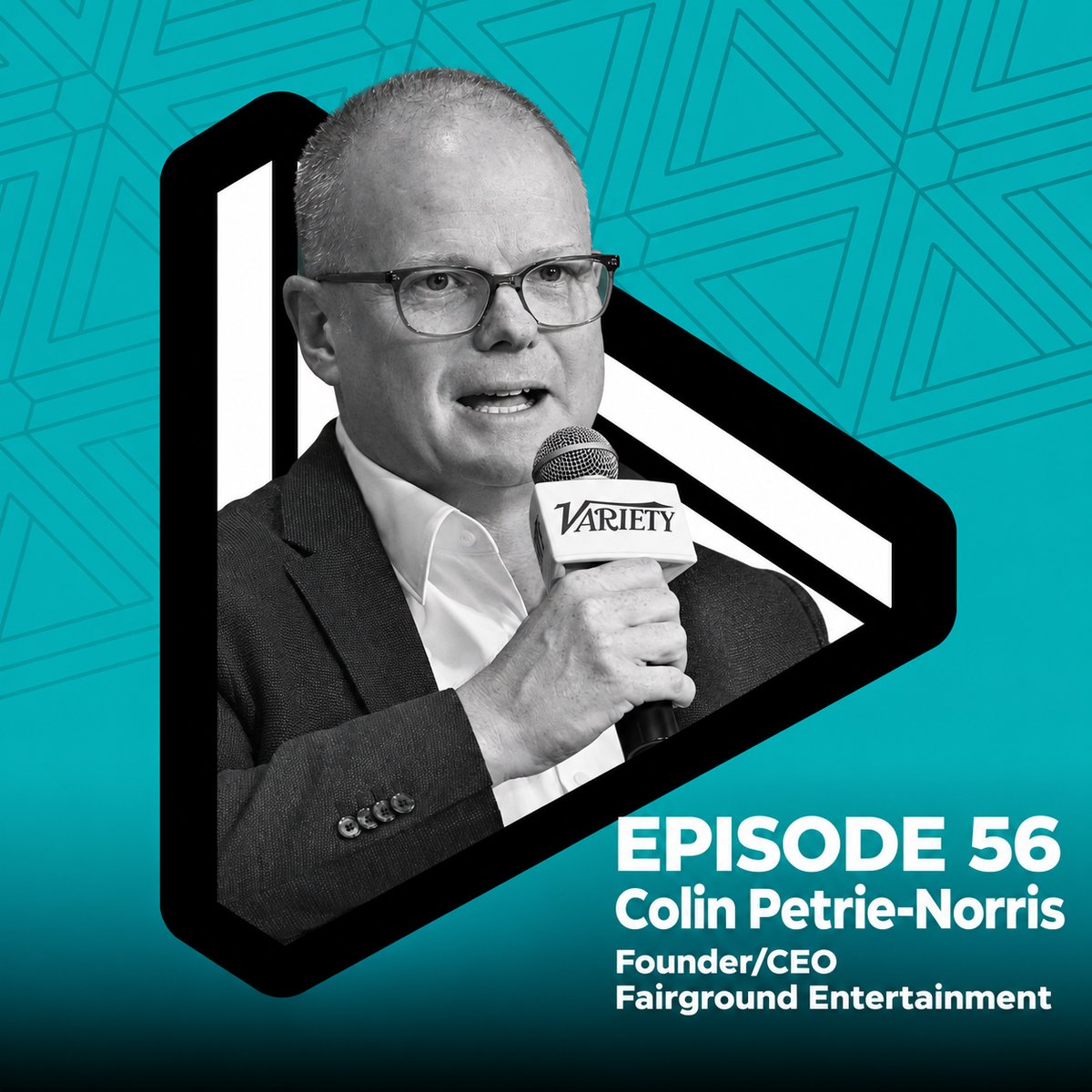
In this episode of Technically Creative, Orlando Wood sits down with Colin Petrie-Norris, founder and CEO of Fairground Entertainment and co-founder of Xumo, to explore how AI filmmaking is changing Hollywood, streaming television and the creator economy.
After helping pioneer free ad-supported streaming television (FAST), Colin is building Fairground Entertainment, a platform connecting AI filmmakers with television audiences. Through its Carousel technology, Fairground helps creators distribute original films and shows to streaming platforms including Roku and Xumo, access funding, and earn advertising revenue while keeping ownership of their work.
Colin explains why traditional filmmaking experience is becoming more valuable, how independent creators can get past Hollywood's traditional gatekeepers, and why storytelling, screenwriting and editing still matter in the age of generative AI.
Watch the conversation
Orlando and Colin explore
- How independent filmmakers can get their work onto streaming TV
- How Fairground distributes AI-generated films and shows
- Making money through FAST channels and advertising revenue
- Why screenwriting and storytelling matter more than ever
- How AI is opening new opportunities beyond traditional Hollywood
- The future of AI filmmaking, interactive entertainment and the creator economy
Key questions
What is Fairground Entertainment?
Fairground Entertainment is a company that connects AI filmmakers and independent creators with television audiences. Its Carousel technology is the content management system the company is built on. Fairground distributes creators' films and shows to free ad-supported streaming platforms, funds some projects, and shares advertising revenue with creators, who keep ownership of their work.
What is FAST television?
FAST stands for free ad-supported streaming television: linear channels delivered over the internet to smart TVs, with ads in the stream. Colin Petrie-Norris co-founded Xumo, one of the original FAST services, and says FAST is now an eighteen billion dollar industry in the US.
What kind of AI content does Fairground look for?
Strong narrative storytelling, usually four or five minutes and longer, made for television rather than social media. Colin says scriptwriting and editing are the hardest skills to find in AI content, and that true crime and documentaries perform well with platforms and audiences.
How do creators get paid through Fairground?
Most of Fairground's distribution is on advertising-supported platforms. Fairground takes a share of the ad revenue and passes the rest to the creator, along with viewing data. Creators start getting paid once they have earned a hundred dollars, and they can take their content down at any time.
What stops AI films from getting distributed on TV?
According to Colin, the number one reason Fairground cannot distribute a piece of work is unlicensed music. The video may be fine, but the soundtrack has to be cleared before it can go on television.
Chapter markers
- [00:00] Introduction: AI Opens Television to Indie Filmmakers
- [02:51] Meet Colin Petrie-Norris: From Xumo to Fairground Entertainment
- [03:28] What Is FAST and Why It Matters for Creators
- [09:11] The AI Opportunity: A New Creator Economy Emerges
- [13:55] What Content Works: Storytelling Over Visuals
- [15:56] The Format Sweet Spot: Four Minutes and Up
- [27:31] The Path Forward: From Creatives to Creators
- [35:49] True Crime and Genre Success Stories
- [39:42] Beyond Soap Operas: What AI Can Do That Traditional Production Cannot
- [43:31] The Economics: How Creators Get Paid
- [55:51] Distribution at Scale: Six Platforms and Growing
- [59:30] The Barrier Nobody Talks About: Music Licensing
Fairground Entertainment: fairgroundentertainment.com
Transcript
Read the transcript Show
Technically Creative by KoobrikLabs Podcast Transcript
Orlando (00:00) yeah, founder CEO Fairground Entertainment. That's right. And am I right in thinking that Fairground is the company and the platform is Carousel? That's like the software platform.
Colin Petrie-Norris (00:11) That's it. Yes, sir. The very same.
Colin Petrie-Norris (00:19) Yeah, carousel is a name of our technology that underpins the company. And so it's sort of the the core central content management system that sort of we're built on. We've got no end of fair ground related names of things. it was one of the reasons came up the but there's lots of ringleaders and carousels and all that kind of good stuff. So I I could I could excuse the the confusion. But fairground entertainment, fair ground is the name of the company. So yeah.
Orlando (00:24) Mm-hmm.
Orlando (00:29) Okay. Great.
Orlando (00:35) Mm-hmm. Mm-hmm.
Orlando (00:40) Mm. Yeah.
Orlando (00:48) Okay, great. Okay. All right. Well, Colin Petrie Norris, I'm so excited to have you on. You're the founder and CEO of Fairground Entertainment. You guys are doing a lot of really interesting things at the intersection of a lot of things we talk about, streaming and fast channel and and all that kind of stuff. So before we talk about fairground, I want to understand the world that made fair that made fairground make sense. So you've spent years in fast and connected TV, including building Xumo. For people outside that world, can you explain what Fast Channel is, how you got into it, and what you learned there about the problem that Fairgrounds now trying to solve?
Colin Petrie-Norris (01:31) Yeah, sure. Orlando, so stoked to be here. thank you for having me. Looking forward to it. you know, looking forward to an an active dialogue here. So yeah, my in my No, thank you. My my in my past life, yes, I started a company called Xumo, which was one of the sort of original fast or what they're what is known as free ad supported TV. And what it is
Orlando (01:41) Yeah, I'm psyched to have you on, man. I mean, this is this is great.
Colin Petrie-Norris (01:59) was we realized this is going back thirteen, fourteen years now, that the smart TV had a very important role to play in the media world. Up till then a TV was something you bought and this entire ecosystem just flowed through it and the TV took you know five hundred bucks for a sale and nothing else happened. So Yeah, and I and it and they were just dumb terminals in a way. And so we worked with a couple of smart TV manufacturers and we said, well why don't we deliver a stream
Orlando (02:08) Mm-hmm.
Orlando (02:12) Mm-hmm. Yeah. Yeah. The information came at you and you had no choice. Yeah. Yeah.
Colin Petrie-Norris (02:28) Yeah, right aside the TV guide, but coming over the internet instead of over the antenna. But that allowed you to do all these magical things like selling ads in the stream. And it also allowed you to go to companies that previously didn't have the resources to stand up a linear channel, but now because it was digital, it opened up all these digital brands to streaming TV. And so what started off as an idea for a sort of a full democratization of the television world.
Orlando (02:56) Mm-hmm. Mm-hmm.
Colin Petrie-Norris (02:57) By using smart technology and all of these smart TVs. we created this ecosystem which fast you know, it started off as a few little channels, but today is an eighteen billion dollar industry in the US with thousands of channels available in every service. So this fast service was a big deal. It is a big deal today. really powerful way to for consumers.
Orlando (03:06) Mm-hmm.
Orlando (03:16) And and to just explain fast to people who don't know, FAST is free ad-supported television. and I think that in the world of streaming where we're just clicking around, we're getting very few ads, we're watching the content we want to be watching. It's sort of what was interesting is that from the digital standpoint, they almost needed to rein reintroduce and rebuild what we knew as regular television, which is growing up in the 80s, television came at you, the ads and
Colin Petrie-Norris (03:23) Correct, yeah.
Colin Petrie-Norris (03:40) Hello.
Orlando (03:43) And there used to be a very clear understanding. They used to say, now this ad break brought to you by our sponsors, it was very clear that the content you were watching was sponsored by these specific people. And that you were getting you had to watch these to get that. And then the more that we've kind of eroded that relationship over time, the more people kind of don't understand the relationship. And then you have things like Pluto, which would be considered fast television. but I'm very interested in what you built with Xumo and and you know how what that was like kind of, you know, ten to fourteen years ago.
Colin Petrie-Norris (04:12) Hundred percent.
Colin Petrie-Norris (04:23) Well, it seemed crazy at the time and you know, because it was you know, it was hard to even to explain to people.
Orlando (04:28) 'Cause people are like, there's television. Why would we need a a second version of television that's ad supported?
Colin Petrie-Norris (04:32) But but Orlando, I think there's like I think if think of you or the folks listening, right? There is a time when you go, you know what, I don't want to do any work. Like I don't wanna I don't wanna sit around and look through carousels of stuff and finding something to watch. We all do that, right? You sit down in front of Netflix and you spend 45 minutes trying to find something. There's this mode of viewing on television and they it's the old lean forward, lean back when you you just give me something really good to watch, make it super easy, serve it up for me.
Orlando (04:41) Right.
Orlando (04:45) Yeah. Yeah. Yeah.
Colin Petrie-Norris (05:02) And that's what Fast did a really good job of. It reached consumers in a way you could just surf through a guide. It's been around as long as television's been around. And it's just good quality content. And what happens is you don't know what you it's a lot of serendipity, right? I don't know quite what I want to watch, but I just stumble on this channel about penguins. And next thing you know, I'm watching an hour of documentaries about and it
Orlando (05:02) Mm-hmm. Mm-hmm.
Orlando (05:08) Mm-hmm. Yeah.
Orlando (05:18) Mm-hmm. Mm-hmm.
Orlando (05:25) Right.
Colin Petrie-Norris (05:26) It satisfied his need in consumers. A lot of I think a lot of it is today what you get on TikTok or on Instagram. It's the same with like if the digital version of that is just gimme stuff. Don't make it really easy for me and serve it at me. That's what Fast does in the TV world. And it's it's massive. Like major studios, major streaming companies now making libraries of content and new content available on TV. So it's become a very big but it's about that mode of like, just give me something good, don't make it hard.
Orlando (05:28) Mm. Mm-hmm. Yeah.
Orlando (05:37) Yeah. Yeah. Yeah.
Orlando (05:48) Yeah.
Orlando (05:54) Yeah. Yeah. And so tell me more about Xumo, because this is, this is, I think kind of, you were very successful there. And this kind of frames what you're doing now. So tell me about your your way in with that.
Colin Petrie-Norris (05:54) Just make it great. You know, that's the that's the view.
Colin Petrie-Norris (06:05) Yeah. So Xumo, what we did was we all we had a Xumo consumer offering. You can go still go see it today. It's amazing. Xumo play, you go watch all these great channels. Now Xumo is a joint venture between Charter and Comcast. And they now that the devices that you get when you're a part of those two organizations are Xumo devices. So it's become this multi-billion dollar organization, very fun to have been a part of its beginnings. But a important part of what we did at Xumo was we went and we helped
Orlando (06:31) Yeah.
Colin Petrie-Norris (06:36) All these streaming companies like LG, Samsung, the Roku channel, Google TV, HiSense, TCL, and we helped them create their own fast offerings. And so Xumo was an enterprise service provider inside of the boxes of all these different devices. And I think that's when I started realizing, and and I think FAS again grew from nothing to this huge industry, but I did feel like there was something missing.
Orlando (07:00) Mm-hmm.
Orlando (07:05) Mm.
Colin Petrie-Norris (07:05) And that's kind of a little bit because a lot of fast channels today are reruns and old shows and library shows. There's a lot of great live news, which works very well, and so that's a cool vertical. But it's a lot of stuff is if you I would say it's more library content. And that's and I spotted in this AI thing. And you've heard of this AI thing, right? It's gonna it's gonna be a big deal. Brace yourself.
Orlando (07:12) Mm-hmm.
Orlando (07:23) Yeah.
Orlando (07:27) I I have w once or twice heard somebody brought it up. I didn't dig into it much. I don't think it's got legs. Yeah.
Colin Petrie-Norris (07:35) Brace yourself, it's gonna it's it's it's gonna be a deal. what it struck me was you couldn't and and this is back when you sort of saw six fingers on a hand and a third eye in the middle of a forehead. It was kind of chaotic and noisy. It's like that is gonna be that's gonna have a huge impact on every part of the entertainment ecosystem. But on these ad supported channels, what it'll allow is with if the cost to create content is coming down, it's gonna allow you to do more unique things.
Orlando (07:47) Yeah. Yeah.
Orlando (08:02) Mm-hmm.
Colin Petrie-Norris (08:04) And that's what got me excited is now all of these relationships, all these streamers, everybody's and this is the commercial value prop, they're looking for new content, new formats, new things to surprise and delight their viewers. And it felt like AI was an interesting way to do that. So that's kind of a little bit what drove me into the market is, you know, I think AI could do some things and it I think can do new things for customers and for consumers. It can it's not just do what has happened before.
Orlando (08:28) Yeah.
Colin Petrie-Norris (08:31) But it can kind of new formats and new ideas is what's possible with AI. And that's kind of what drove me to fair ground. working with those same streaming partners and thinking about how I can bring this new type of content to bear on that.
Orlando (08:38) Yeah.
Orlando (08:44) Yeah, because I mean, this is what fascinates me about your story is, you know, Xumo, you you built it, you sold it to Comiccast for reports were over a hundred million. You know, you have been that is one of the defining pieces of technology that kind of created and defined fast channel, you know, television. Now with Fairground, you're working with the the smart TVs and AI. And let me see if I can sort of articulate it properly, but basically. Using AI to curate the experience of a you know a library so that you know when you're programming that it feels curated, it feels editorially sensible when watching it in on a channel, for example. And that basically you use AI to create connective tissue between library properties that are on, you know, that are that are on these ad-supported tiers. Is that a a good summation?
Colin Petrie-Norris (09:37) It it's somewhat. There's a little more to it as well. And so I think what I also, Orlando, like to talk about is there's a new creator economy upon us. The first generation of creators were was bloggers. Remember blogger on with Google or Google Boy, anybody could set up a blog. That was generation one creator. Generation two, the everybody with a digital camera could upload their content to YouTube.
Orlando (09:38) Okay. All right. Yeah.
Orlando (09:57) Yeah. Yeah.
Orlando (10:05) Yeah.
Colin Petrie-Norris (10:06) And YouTube is then this massive organ like it's this creator powered sort of sort of brand. Third digital cameras or some mobile phones gave you TikTok and reels. And of course that's that's the next creator economy. We're now in the first innings of a whole new creator economy. People who not don't don't necessarily want to be in front of the camera, but filmmakers
Orlando (10:17) Mm-hmm.
Orlando (10:29) Mm-hmm.
Colin Petrie-Norris (10:31) That are using AI to bring their ideas and their stories and their narratives to life. They've got industrial light and magic in their pockets. They're all over the world. This is fully democratized. And that's what fairground is really about. Now, we're captured we have thousands of these creators now in our network. And they, you know, that that are sending us their content. We're using AI to try and lift and improve, but also help the creators make better content.
Orlando (10:38) Yeah.
Colin Petrie-Norris (10:59) And then send it over to this traditional streaming world. So we're at the connective tissue between a creator. Sure, you can put your stuff on YouTube, you can put your stuff on TikTok, but if you want to get to television, that's what Fairground is sitting in doing. Now, you can imagine, Orlando, that with the decrease in cost to make content and all of these people over the world starting to make it, there's this
Orlando (11:00) Mm.
Orlando (11:07) Mm-hmm.
Orlando (11:10) Mm-hmm.
Orlando (11:24) Mm-hmm.
Colin Petrie-Norris (11:25) Massive volume of content starting to make its way, people making incredible stuff. And it's trying to sort of figure out what is good and what isn't, what's got safe for copyright perspective, what's got an audio track that hasn't been licensed. Is it good for television? That's really where Fairground is also helping organize and sort using AI and also an amazing team of people trying to help sort of help creators make better and better content so that they can.
Orlando (11:31) Mm-hmm.
Orlando (11:37) Mm-hmm.
Orlando (11:44) Uh-huh.
Orlando (11:48) Mm-hmm.
Colin Petrie-Norris (11:52) sort of earn a proper living and get some real recognition on television. So that's sort of where k see where that connective tissue between this new creator universe and what took five years to grow on YouTube is happening in five months in this world here today, in this world that we live in today, like in in in this this ecosystem.
Orlando (11:56) Uh-huh.
Orlando (12:06) Yeah.
Orlando (12:11) And so what are the time lengths and formats that are most likely to be placed through fairground? What are you focused on curating? What are you telling the creators that you are most interested in buying? what how w yeah, what's landing there most?
Colin Petrie-Norris (12:17) We
Colin Petrie-Norris (12:23) Yeah, so first of all, what we're not is we're not about social media provocative sort of copyright infested kind of content. That is for social media. We're working in television. And so what we love is narrat strong narrative, storytelling, longer form, starting four, five, six minutes and up. And people and telling a little story.
Orlando (12:35) Mm-hmm. Yeah. Mm-hmm.
Orlando (12:44) Mm-hmm.
Orlando (12:49) Yeah.
Colin Petrie-Norris (12:52) that you're excited about. and and sort of and I think what we is and that's really the sweet start because we're again we're thinking about linear, we're thinking about television. Think about, you know, you want to have sit down, you wanna, you've got a glass of wine, you wanna enjoy a little time. This isn't the immediate dopamine hits of social media. This is about enjoyment and storytelling. And those are the type of things that we're trying to connect. And the good news, Orlando, the talent out there is unbelievable.
Orlando (12:53) Yeah. Yeah.
Orlando (13:02) Mm-hmm. Yeah.
Orlando (13:14) Mm-hmm.
Orlando (13:21) Yeah.
Colin Petrie-Norris (13:22) Folks that could never get recognized inside of a studio up the road are making things that will blow your mind. And that's what I'm excited about. And so that's what the television companies are excited about as well. So that's the that's that's the answer like it's it's more narrative based, longer form storytelling brought to life with AI.
Orlando (13:29) Right.
Orlando (13:35) Yeah.
Orlando (13:41) Yeah. But so over four minutes, I mean, the the what that's it's casting a wide net. So like what is what are the things most likely getting? Like, what's a format that you go? This gets easily placed, this is really good. Somebody sends you something and it's 25 minutes, you go perfect. Or somebody sends you something that's four minutes, 30 seconds, and you go, or like what is your like what's most likely getting placed, what's most getting watched, what's editorially, where where do you sit in terms of what you're
Colin Petrie-Norris (14:10) Well s so so going back to the fast channels and fast is where we really are focused, but also ad supported television. The good news there is the old notion that there's this thirty minute programming block, you know, twenty three minutes show with seven minutes of ads, that doesn't exist in the world we live in. You can have shows that have been eighteen minutes in length, you can have shows of hour and a half, you can flex and stretch.
Orlando (14:11) programming.
Orlando (14:18) Yeah. Yeah.
Orlando (14:25) Right.
Orlando (14:30) Mm-hmm.
Colin Petrie-Norris (14:38) the shows lengths to accommodate the stories. So the idea of having to fit in these perfect blocks, it's not like old cable TV. There's a lot of sort of power and there's a lot of opportunity for any kind of length. So it's that's the first thing to get rid of. Here's what's most important though. You've got to tell a good story. Actually a good so going back when we started Fairground, we started, we set up a studio and we started making T V shows.
Orlando (14:39) Mm-hmm.
Orlando (14:55) Mm. Yeah.
Colin Petrie-Norris (15:09) And we selected the first creators to make the first TV shows on the strength of their visual ability. How beautiful a video could they make? Because we wanted to see people who could really use these AI tools. And we we got some really gorgeous stuff. Like when the shows were coming together, but we realized that we hadn't spent enough time on the script writing. And what happened was you would sit down and was visually gorgeous.
Orlando (15:18) Mm-hmm. Yeah.
Orlando (15:32) Mm-hmm.
Colin Petrie-Norris (15:36) But the narrative and the few the human side was a little behind, a bit lacking. So we're in prior we actually we select stories more on the basis of their storytelling brought to life with AI, of any length, more than five minutes or so, as long as a good story. so so I think that's kind of what we really are learning. You know what the most hard to find talent is in AI content development at the moment?
Orlando (15:37) Yeah.
Orlando (15:42) Yeah.
Orlando (16:03) What, why?
Colin Petrie-Norris (16:05) Script script script writing. Actually script writing and editing at the bottom back end. 'Cause the things in the middle are getting easier, but telling a good story and putting it all together in a sort of a gorgeous way, those are still where a lot of the human talent comes in as well.
Orlando (16:11) Mm.
Orlando (16:20) Yeah, and you would think that, like, I mean, Hollywood has been only making one percent of the screenplays that have been thrown at it for a hundred years now. You would think there there would be ninety-nine point nine percent of years of of sc of screenplays sitting around, kicking around people's desks, ready to go. you know, I mean, good things get passed on all the time in Hollywood.
Colin Petrie-Norris (16:46) And you know what this is, by the way, you've struck on literally the most beautiful thing about the space you're in right now. These story like I think there is this, my god, AI, what is it gonna mean? And then you go, wait a minute, I had a story idea and nobody ever blessed it. I had to run through twenty gatekeepers to get that to be funded and get on TV. Now, if you're a great script writer and you had an idea, the barrier to getting that built now and you deliver it through fairground, you're on television two weeks later.
Orlando (16:49) Hmm. Hmm. Hmm.
Orlando (16:59) Yeah. Yeah. Mm-hmm.
Orlando (17:11) Mm.
Orlando (17:15) Yeah, yeah.
Colin Petrie-Norris (17:17) Like that and that opportunity is what I'm like, you know, I'm trying to tell people, you know what? Yeah, but it it's a scary thing. We've got to get our heads around it, we've got be respectful. But the opportunities are immense and the and the gatekeepers are all disappearing. It's just connecting talent to delivery and distribution. And it's I think we're at the beginning of a very special time in the entertainment industry because of that. because yes, those scripts that just filled all those
Orlando (17:28) Yeah.
Orlando (17:43) Mm-hmm.
Colin Petrie-Norris (17:46) pilot episodes of shows that re like that were that were shown to a a movie theater full of people and they were like, Yeah, we're not so sure and then it gets binned. Boom. Bring back to life. That's the kind I think that gets me pretty excited.
Orlando (17:49) Yeah.
Orlando (17:55) Mm. Yeah. Yeah. So explain to me the economics of it from a from a filmmaker's perspective, but as well from a platform perspective. So, you know, Fairground is the company. Carousel is your platform for putting this stuff out there. I mean, obviously the the thing with with social media is there's a lot of benefits to it. One is when you scroll to a new account, let's say TikTok, you're starting at the start of the video. You're not
Colin Petrie-Norris (18:25) Mm.
Orlando (18:26) Getting dumped in a minute in and having to figure out what this is about. And you know, part of that is the joy of television. You click around, you're like, I wonder what that penguin's doing. And then you slowly find out. And you're right, that's great. But social media has kind of fixed that. It allows that browsability while starting at the beginning. And then also, if I like something, I have the ability to track down the user and sign up and potentially see more of their work. But how does the ecosystem work for The user and for the consumer.
Colin Petrie-Norris (18:57) Well, so good news, while FAS and the linear channels is obviously something I care deeply about and it generates a lot of consumption, everything we do is available on demand as well. So you can actually do and enjoy right from the beginning. And many of the FAST services allow you to start a show from the beginning or have VOD catalogs, on demand catalogs to complement the linear. And so that is very much still
Orlando (19:14) Yeah. Mm-hmm. Mm-hmm. Right. So I'm browsing. I like the look of something. I start watching. I'm three minutes in. I press go back to the beginning and I'm now watching from the beginning. Yeah.
Colin Petrie-Norris (19:26) Again, many of the platforms have that facility and that's available. No, again, it's but and the bigger ones definitely do that. So that's a good news. The second thing is fairground believe we are passionate advocates of our creators. So when you sh when a show is being played out either on the inside of a channel or on demand, the first tile you see standard is the name of the creator. their social media handle, how to follow them. We allow them and we put that up at the front. Fairground, we're an enabler. We're not the focus. And we will do that as long as we're able to make the the we want the creators to be famous. There is also inside there is a service coming a little later this year, an application where you'll be able to follow along and watch the creators and I guess so that will be a part of what we offer. Because I know you're right. I mean these there are these folks that are
Orlando (20:02) Yeah. Right.
Orlando (20:08) Uh-huh.
Colin Petrie-Norris (20:21) Like I think they're the Mr. Beasts of tomorrow. Like they are gonna have and you know what, they're big on YouTube. We need to give them ability to have an audience and have a following and sort of we're focused on that as well. But but yeah, it it isn't just linear, it's also on demand and it's creative first is the is the is the is the idea. Yeah.
Orlando (20:24) Yeah. Yeah.
Orlando (20:34) Mm-hmm.
Orlando (20:38) Right. Yeah. And what sort of audience are we talking about? I mean, where is this stuff going, you know, and and how are people accessing it?
Colin Petrie-Norris (20:46) Mm. So today we're live on is I think six platforms. we've got four more launching in the next few months. The big ones are it is live on Roku's one, you can go see all the content on Roku. Xumo, my old Xumo's got me. I they were they were terrific once I get going, still got a great relationship with them. And then many others you can go see, you get you're gonna actually follow along. But yes, they're live and on TV today. And
Orlando (21:09) Great. Good.
Colin Petrie-Norris (21:18) And well, Lena, I also like to say like Free TV started off as this little idea. And it was like this, you know, and I I remember our f actually our first revenue checks were at what I think we made twenty three dollars the first month that we were live. Fast forward today, it's an eighteen billion dollar industry, hundreds of millions, billions of dollars of revenues coming in. We're at that same juncture, we're at that same first innings. The platforms actually something worth mentioning as well.
Orlando (21:27) Mm-hmm.
Orlando (21:36) Mm-hmm.
Orlando (21:44) Yeah.
Colin Petrie-Norris (21:54) I I am blown away by the excitement that the platforms have for this medium. They love and you know what they like more than anything? They like the fact that these are storytellers that they can have a connection with. And it's the people behind the content which is the most exciting thing of all. Because I they love the idea of this sort of again, I'll use the word democratize storytelling. and so I think we're at a beginning of a very special time in a in the entertainment world because of that.
Orlando (21:59) Right.
Orlando (22:10) Yeah.
Orlando (22:17) Yeah.
Orlando (22:20) Yeah. Yeah, for sure. I mean, you know, the if the first generation of disruption was disruption to distribution, which is so much of what we've been talking about here, the next disruption is a disruption to production because production now became cheap in the same way that that that distribution became cheap. and so you're right. I mean, I'm seeing the thing that's frustrating to me is that so much of the time what I'm seeing is so many of the people that I know who have been creators or or creatives, To make that distinction between a creative and a creator. Creatives are the people who work within big distribution and production systems that require that system in order to be creative. Whereas a creator is somebody who has the ability to create from scratch today, whether it's just with the, you know, the the iPhone in their pocket or whether it's with these new AI tools. and what I'm seeing is a lot of creatives aren't transitioning to becoming creators.
Colin Petrie-Norris (23:09) Interesting. Yeah.
Orlando (23:20) And the creators are just getting better and better and better and better at what they do. And so I think that you know there is a learning curve here. And and I'm I'm passionately advocating all the time for more people that I've worked shoulder to shoulder with who have got the hard one production experience in the previous era to be the first ones to pick up the tools, not the last ones, you know, because again, more of your bottom of your drawer.
Colin Petrie-Norris (23:45) Yeah.
Orlando (23:49) Script ideas can be made, you know, and and a lot of the things that you weren't able to sell through can be made. And it's great that you had a good career as one of the one percent who could get things made, but it's important to start learning this new thing because there's just more opportunity. Whether or not it it's any better creatively, that's almost not the point. It will be better creatively if those creatives who have experience do it.
Colin Petrie-Norris (24:01) Yeah.
Orlando (24:15) And but B, there's just more opportunity, as as you're proving with fair ground and carousel.
Colin Petrie-Norris (24:21) You what, dude, I I've got a great friend, JT, who's he's a he's a video film videographer, video editor. He's worked for decades in the industry. And I watched him learn AI. And he when he goes and he prompt he writes a prompt to do a scene. He goes, he describes the millimeter lens on the camera, he describes the scene.
Orlando (24:41) Mm-hmm.
Orlando (24:46) Mm.
Colin Petrie-Norris (24:49) Because he's been trained in the traditional subgor like fully fledged way to do a proper scene, what kind of lens you have, this millimeters, whatever. And he goes and he writes a prompt, and my God, what comes out the other side is perfection. Because he has a control of a high like, you know what it's like running AI. It's chaotic, it's hard, it's hard to predict. So I'm like, that's it, and that's one example of somebody you're like, okay, I have talent and I've learned something.
Orlando (24:53) Mm.
Orlando (24:56) Yeah. Yeah.
Orlando (25:05) Mm-hmm.
Orlando (25:10) Yeah.
Orlando (25:15) Mm-hmm.
Colin Petrie-Norris (25:17) in this traditional world. Script writers that can write a great script. It you can jump ahead if you jump into this world. You've already got an edge. Because it it you can craft things much more quick. Somebody who doesn't know anything about film editing or like or video cameras and filming has to do forty iterations of something. You can do it in three or four. So yeah, I see so you're right.
Orlando (25:21) Mm.
Orlando (25:27) Mm.
Orlando (25:40) Yeah.
Colin Petrie-Norris (25:45) It is very it it is I like encourage like get in like I look by the way, I think everybody is tinkering. Everybody's playing around. I think it's happening. and so it's it's happening more and more.
Orlando (25:53) Yeah, yeah. I think it I think that everybody's tinkering, but I what I find is creators that have never had access to post-production tools, who have never had a multi-million dollar project made. So many of the people that I work with in commercials, they're making multi-million dollar productions every other month. You know, and and so they're sort of spoiled for choice. They're working with
Colin Petrie-Norris (26:06) Mm-hmm.
Colin Petrie-Norris (26:20) Yeah.
Orlando (26:25) you know, frame store and they're working with great post-production houses and untold studios and places like that. And then, but and so they're sort of used to that. They're too used to that. And I think that they're fat and happy and that's great. but I think the creators who have never had access to a flame suite in their lives, who have never sat in the back of an edit room with an avid editor or a premiere or even
Colin Petrie-Norris (26:50) Mm.
Orlando (26:52) Back before Final Cup 10 ruined everything, a Final Cut editor editor, you know, like they they've never sat there and worked collaborative on something like that. So they're going, my God, this is my moment. This is the first time I've ever had this kind of access. I'm gonna use it. And they're just not missing the moment. and I think that you know, a lot of the creatives I know are missing the moment because they're going, well, no, no, no, I prefer sitting in a flame suite. It's like, of course you do. So would that creator? They would have preferred to be sitting in a flame suite. They just never got the opportunity. And so I don't think it's it's right for us to shit on them for you know for taking that opportunity and calling everything they do slop. I think it's rude actually. And you know, and I think against the whole creative ethos, the creative ethos is about optimism and and you know and and enthusiasm. And I just think a lot of creatives are are, you know.
Colin Petrie-Norris (27:30) Not at all.
Colin Petrie-Norris (27:36) Well so
Orlando (27:51) kind of shitting on young creators because of it. Anyway, sorry, I didn't mean to soapbox. We're here to interview you, not to find out what I think.
Colin Petrie-Norris (27:56) No I didn't. No, I actually but I I think you look you're spot on on that now. And I look I I'm very conscious of that fear, there there and that and that that concern. I think there are I think there are three important atmospherics, if you will, that relate to that very state of mind. The first is okay, I have an idea, I want to do something with AI. Number one is it's hard to know what tools to use. Like
Orlando (28:19) Mm.
Orlando (28:26) Yeah.
Colin Petrie-Norris (28:27) It y it is hard like how do I use Higgs field and this and and and fa if that's already the immediately a barrier for somebody who has to go learn something new. They're getting better and better. The aggregators are now making it easier and easier to get the best of C dance and cling and all this stuff, but it's still kind of chaotic and noisy. So that has to continue to get better.
Orlando (28:31) Yeah.
Orlando (28:37) Mm-hmm. Yeah.
Orlando (28:42) Mm-hmm. Yeah.
Orlando (28:50) But also each workflow is different. I mean, it's like it's like saying I want to be an editor, I'm being immediately presented with avid premiere and final cut ten all at the same time and going you know, like, yeah, you're learning different keyboard shortcuts and whatever else. And you're the fear at the beginning was, well, if I get good at runway and then runway stops being the best, but now you're right. All of them aggregate everything, so it doesn't matter.
Colin Petrie-Norris (29:01) Correct. What the hell's going on?
Colin Petrie-Norris (29:10) No, I'm gonna get yeah. I'm out of date already before and so that fear is so I think you look there are very good aggregator platforms that sort of take are always getting the best of into your suite. And I'd encourage somebody sitting around and like use the aggregator platforms. Don't try pick a tool. Look at the platforms. Number two, and this is where fairground comes in, I don't make any money out of this. It's interesting, but what do I do with this when I'm done with it?
Orlando (29:25) Yeah.
Orlando (29:30) Mm-hmm.
Orlando (29:39) Yeah.
Colin Petrie-Norris (29:39) And you and distribution has to start to open up so that I can go from doing forty bucks on if for or putting something on my Twitter feed to making four hundred or four thousand dollars and now I'm like, Okay, now this is a business. That will start to happen and we're starting to see the beginnings of that now. And and then I think that was so th those are the main the two main ones.
Orlando (29:43) Yeah.
Colin Petrie-Norris (30:03) I forget my third one, but it was a good one. It was gonna be the best point of all. But I said let's just figure out let's just stick with it. It'll come to me in a minute. But that's that's sort of the
Orlando (30:05) Ha ha ha.
Orlando (30:11) We can come back to it. I mean just just tell me. When it comes to you, just say Eureka and and we'll cut it as though you never that though there was never a break.
Colin Petrie-Norris (30:16) yeah. just got so excited about my first two points. But that was it. So but it but that's it so I think that's and and then I think that yeah, so I think that was that was that probably let's I'll come to me. yeah. No. No.
Orlando (30:23) That's good.
Orlando (30:32) Yeah. If you wanna and no, honestly, if you wanna take a minute and think it through, like we like I'll I'll cut all this out, don't worry.
Colin Petrie-Norris (30:40) No, that's it. Let's just go with two points. Those are two good points.
Orlando (30:42) Okay. Okay, good. so you know, so d talking about that for a minute, then how are you finding the the artists? How are you finding their work? How are you like are are they just sending it to you? I mean, imagine some who have worked with you before are just sending it to you, but but are you doing a lot of reach outs? I mean, how's that how's that working?
Colin Petrie-Norris (30:59) Yeah.
Colin Petrie-Norris (31:05) Yeah, so we have look, when I started the business eighteen months ago, two years ago, eighteen months, I would just reach out to people making cool things on social media and I'd say, Hey, I come from T V land. Would you like to try work with me to take what you've learned at AI and start trying to do stories? And one one outreach turned to a second to a f and then I just got to meet people and today that I've got, you know, thousands of I'm super I'm blown away by it's actually kind of a nice i there's not a billion people who can do long form T V using AI in the world right now. It's a small community. and so it's been outreach. We we do actually
Orlando (31:41) Mm. Yeah. Yeah.
Colin Petrie-Norris (31:50) The we do something we we have a program, we call them affectionately our ringleaders, which are our we when we says 'cause Fairground also pr brings funding to projects. We don't just wait for you to bring stuff. We love that. But we're also financing projects. because 'cause we're and they're modest, but we've spent, I think, probably half a million dollars so far in
Orlando (31:55) Mm-hmm.
Orlando (32:03) wow.
Orlando (32:07) Wow, okay.
Orlando (32:15) Great.
Colin Petrie-Norris (32:17) in financing projects with creators, maybe four hundred thousand or something so far.
Orlando (32:21) Yeah. And what's the average check size?
Colin Petrie-Norris (32:23) They're small, they range from a few hundred bucks to a few thousand to sometimes a little bigger than that. and we're planning to do more of that. And we do that because and we some some of that is advances.
Orlando (32:27) Great. Great. Yeah. And do you then retain and and own that IP? Is that work for hire or is it just some sort of it's just a, you know, like how does that work? Or
Colin Petrie-Norris (32:40) No, we believe from the beginning that the create w the creator needs to own and feel ownership of their work. Look, there there's another whole conversation around copyright and everything in I and AI, but but the financing that we provide is we are doing that for distribution rights. And sometimes not even exclusive. Some we're just sort of saying if you if we we we'll give you an advance on this, if you build it, you can run it on our platform.
Orlando (33:00) Mm-hmm. Right.
Colin Petrie-Norris (33:09) And if you make a ton of revenue out of it, you get that as well. So it's almost like a it's priming the pump for these, these, these developments. And I believe, Orlando, that and that will be a model we'll keep going. We do some work for higher work. We get people coming to us and saying, We got studios with us now, and others going, we need talent. And we're happy to refer. We do that many times over. People, we connect people because we're seeing a lot of business come through.
Orlando (33:12) Mm-hmm.
Colin Petrie-Norris (33:35) But at the end of the day, we want to be a platform that you bring your content to and we elevate it. And so the financing is more oriented towards helping you as a small business or a small studio get your production out there. But what that also but
Orlando (33:44) Mm. And so are they pitching you or are you commissioning them? You know, I know I know it's a the moment the money goes out, it's a commission to a degree, but are you choosing format and choosing content and saying we want something that looks like an AI game show, we want it to be in the romance love island y kind of world? Go. Or are you or are they coming to you and you're going, I like what you do. You pitch us what you want to make, and they say, I want to make, you know, TV space opera.
Colin Petrie-Norris (33:55) Mm.
Colin Petrie-Norris (34:07) Yeah.
Colin Petrie-Norris (34:14) Yeah.
Orlando (34:18) with ten minute five ten minute episodes. Like what how does that work?
Colin Petrie-Norris (34:23) So we are we tend to do projects look actually so you asked this a little earlier, like what works and what the platform's like. There are certain genres and types of show that perform really well. And the platforms, the many of those that I just listed are saying to us, get us more of this type of content. And so that's where we look, if we if we're saying to you as a creator, I'll tell you number number one, true crime.
Orlando (34:32) Mm-hmm. Yeah.
Orlando (34:48) And what are those genres generally, just out of interest?
Colin Petrie-Norris (34:53) Prime
Orlando (34:53) really? Okay. Yeah.
Colin Petrie-Norris (34:56) Like audiences just eat that up here in the US. So we did this gr this cool ser we did actually season one and we did season two. We're thinking about season three soon. where we did this true crime series where we said to the creators, We want to do a true crime, a series of true crime shows and we want them to be themed. So we'll do true crimes of the wild west. And we asked them to go go on Wikipedia.
Orlando (35:22) Nice.
Colin Petrie-Norris (35:25) Look, Wired Earth and Billy the Kid, sure, everybody's seen that. Go find stories
Orlando (35:25) Yeah. Yeah. Did I see this with Jagger Water? Did Jagger do one?
Colin Petrie-Norris (35:33) Jagged it. I think she did she did create
Orlando (35:35) Yes. I knew I had seen this. I was like I was like, that's a great idea. Also, I'm pretty sure I've seen an episode, so that must have been it.
Colin Petrie-Norris (35:41) Jagger Jagger was in season two. Love Jagger. She was in season two. And I think she did, was it crazy criminal, like of the the stupidest criminals where she did? she was in but but then what we do, Orlando, is we have people write up a script and say, hey, here's an idea for a show. We we do blind readings, we look at them and we say, these are the ones we'll fund them. And then we make then a six or seven-minute little segment, and then we take the
Orlando (35:44) Great, yeah. Yeah.
Orlando (35:50) Right, yeah, yeah. Yeah. It's funny.
Orlando (35:57) Yeah.
Orlando (36:04) Mm-hmm.
Colin Petrie-Norris (36:09) Like five times six-minute segments, we put it into a 30-minute show called True Crimes of the Wild West. But every one of those is a is a creator's own idea. Like Noah Wagner is another guy. I always talk about him. He's amazing, great talent. He did this true crime show about an ostrich feather heist in Anaheim in 1865. And it was these guys that broke in because ostrich feathers were like extremely valuable. He did this little seven-minute show. He used
Orlando (36:13) Right. Yeah.
Orlando (36:21) Yeah. Yeah.
Orlando (36:30) Wow.
Colin Petrie-Norris (36:37) He was green screening. He did at the time he had to sort of act it out with like he like incredible work he did to get this production out the door. but yes, that's an example. So, first of all, crime stories work very well with US audiences and around the world. So send us matches those, and those tend to be the type. We're also looking at documentaries. We do some work in other genres, but we're also
Orlando (36:46) Yeah.
Orlando (36:55) Mm-hmm. Yeah.
Colin Petrie-Norris (37:05) trying to find things, Orlando, that are the authentic like good authentic uses of AI. actually one thing very was I want to talk back to I think I came up with my third point. How about that? You Luca. Is you could just let it run. I I forgive me the the audience, but this is you see, I I'm not a twenty three year old founder. I'm a little older.
Orlando (37:10) Yeah.
Orlando (37:18) All right, yeah. Yeah.
Orlando (37:28) Right.
Colin Petrie-Norris (37:30) the Orlando, what I get excited about, you know, this this world, this this fear of we're in with AI, I think it's very well founded and and creatives and creators are are going, you know what, I've been I've for these last ten years I've been making these great movies or ads and things, and now this AI is this threat to take that away from me. I Like I like to tell a story. When radio first arrived on the scene, the first shows on radio were they used to read vaudeville theater because that's what people did. You you know, so they that was the first shows. When television arrived, the first TV shows were soap operas. That's what you listen to on the radio. We're in an AI moment where all the AI movies are just doing what Hollywood has done for twenty years, fifty years.
Orlando (38:07) Mm. Mm-hmm. Mm-hmm. Yeah.
Orlando (38:18) Fi yeah, yeah. Yeah.
Orlando (38:26) Mm-hmm. Mm-hmm. Mm-hmm.
Colin Petrie-Norris (38:28) There's not i they they're democratized and people who can make them and couldn't before. But you know what, Orlando, what I start getting excited about is what can you do with AI that you couldn't do in a th in a in a in a theater or or a set up on stage. AI you can make multiple endings to a story. You can do you can just definitely you can do do multiple languages. You can have data feeds coming in and affecting in real time
Orlando (38:39) Mm.
Colin Petrie-Norris (38:56) Way the story is playing out to consumers. Choose your own adventures. You so so what I get so again, I keep using the word get excited because I do just generally spend my life being excited about stuff. But when the ta when that incredible talent, somebody who's just got this incredible brain for just production or writing, starts to go, you know what, I can do something that's never been done before.
Orlando (38:59) Yeah. Choose your own adventure.
Orlando (39:09) Yeah. Yeah.
Orlando (39:23) Mm-hmm.
Colin Petrie-Norris (39:24) And that talent starts to come p to bear on these tools and song to push them in new formats. And we start and then we start living the the the the era beyond soap operas. And AI starts doing things that are there's this these folks making this movie. it's the guys thinking they're doing an Alice in Wonderland weed remake. And it's my friends at massive studios are just incredible. I mean this idea so they've got this movie Alice in Wonderland or I think I don't know
Orlando (39:30) Mm-hmm.
Orlando (39:46) Mm-hmm. Mm-hmm. Yeah.
Colin Petrie-Norris (39:54) But they but y the idea is that I don't I'm sorry if I'm giving this away. apologies Reza if I'm doing this, but this idea that you could buy a
Orlando (40:00) Yeah.
Orlando (40:04) massive yeah, Reza's Reza's company. Yeah, yeah, now I now I know.
Colin Petrie-Norris (40:08) But anyway, whether it was him or somebody else's, like this idea they've got is you can go buy a ticket to the movie three days before or whatever. You can take a you can upload your social media profile or you take a photo of yourself, you buy a VIP ticket, you go to the theater, and you're in the movie. You're actually in the f freaking movie. Now, that's cool, right? And things like that.
Orlando (40:10) Yeah.
Orlando (40:24) Mm. Yeah.
Orlando (40:35) Yeah.
Colin Petrie-Norris (40:35) are going to be what we are talking about two years from now. We're not going to be talking about, hey, you made my show cheaper than before. It's going to be stuff that you couldn't do before. That was my that's why that's what I think as the it creatives take heart. Find the new things. Get to know the tools. Do things which haven't been done before and boom, that's when that's when you create a whole new market for entertainment.
Orlando (40:42) No. Yeah.
Orlando (40:57) Yeah, I mean I think that the word for it is skew morphism, isn't it? It's that that thing where the reason that the engine is in the front of a car is because that's where the horses used to be. You know, and then yeah, and and I think that that's yeah, and I think that like, yeah, we're definitely seeing a lot of like, you know, a lot of people reworking the old formats. But pretty soon the technologists that that understand what the technology can do.
Colin Petrie-Norris (41:01) Zal
Colin Petrie-Norris (41:09) Yeah, that's a good way to say it, yeah.
Orlando (41:26) We'll be creating brand new formats. And I think listen, I think that, you know, already, I think we've just seen it a little bit with the backrooms movie. you know, that Kane Parsons did. You know, the movie isn't the way into that world. You sort of the movie is an augmentative piece if you've already looked at all the backroom videos on YouTube. so it's, you know, there's, you know, the movie is is not the platform that it's
Colin Petrie-Norris (41:34) Yeah. That's right.
Orlando (41:55) YouTube is the platform and the movie is some, you know, interesting new thing. Exactly. Yeah.
Colin Petrie-Norris (41:59) It's it's a sort of a pre a presentation layer or it's yeah. There was there's another one, there's there's this company, Bernie Seuss, over at Pickford, and they're doing these shows where you can you scan a QR code and then you can you can sit in an audience and this show, beautiful show plays out, but everybody is voting for things and suggesting things and it's changing shape while you're sitting watching the show. And you're watching a thirty minute feature show. Like those blow my mind. Like
Orlando (42:07) Mm, mm.
Orlando (42:22) Wow.
Orlando (42:27) Yeah.
Colin Petrie-Norris (42:27) That's that that's that's the kind of thing but look, here's another with AI, okay, you can make content with AI. You could also make you can make a video game at the same time, you can make a social media character, and you can create a whole 360 experience in the same time as it used to be just to make a show. Like so so I think possibilities are endless. We we actually did this show and we're gonna build it a little late. We did this show, we showed it off at January at CES called What's in the Fridge.
Orlando (42:34) Yeah.
Orlando (42:46) Yeah.
Orlando (42:57) Mm-hmm.
Colin Petrie-Norris (42:58) where you could take you could take your phone and you could go over to your fridge, take a picture of it, and upload it to Fairground. And within a few minutes we would have our chef, Milo, actually make you re make you a recipe and cook you cook tell you what to cook with what's in your fridge. And that's a that's a concept. Opportunity.
Orlando (43:16) Mm-hmm.
Colin Petrie-Norris (43:24) Again, made only but you could you could never do this with a traditional sort of production approach. So, you know, I you know, that's I think the I think the future is bright, when we get our heads around it.
Orlando (43:28) Yeah.
Orlando (43:33) Yeah. You touched briefly a couple of questions ago, you touched briefly on the creators earning from the platform. How does the financial model of this work?
Colin Petrie-Norris (43:44) Mm-hmm. Yeah, we're foc like most of our distribution endpoints are advertising based platforms, so we do add rev shares.
Orlando (43:53) And and you're selling it or the the I mean, I imagine Roku's selling the ad space, you're getting a percentage of that based on the viewership that you're garnering from the ad revenue. Yeah.
Colin Petrie-Norris (44:03) Yep. And and we fully transparent share that back to the creator. So we take a we take a cut and then the creator gets that and we get as looking as production gets scales up, we're sharing the data with them as well. Like here's what worked, here's what didn't, here's how to make it better. So yes, it's the ad the advertising supported world is what I'm particularly focused on.
Orlando (44:09) Right.
Orlando (44:18) Yeah.
Orlando (44:25) Yeah. What's the biggest creator? What's the biggest financial success story from one of your creators?
Colin Petrie-Norris (44:32) the actually that true crime show, we haven't I will say we only launched it about three months ago and we've seen some early numbers. We're gonna be talking to our creators soon about it. That looks like it's the best one. The cri crime series is working pretty good. We we're waiting for the final answer on it, but that looks like a good one.
Orlando (44:36) Yeah. Yeah.
Orlando (44:41) Yeah.
Orlando (44:51) Yeah. And what I mean just I mean, ballparking, what would you expect the the creator might be able to make from from that?
Colin Petrie-Norris (45:00) too und too early to say. And I mean that very genuinely. It's we're probably we're we're d it'd probably good to go to the creators first. again, t here's here's something. Again I wanna say on the one hand
Orlando (45:03) Okay, all right. Fair fair enough.
Orlando (45:08) Yeah.
Colin Petrie-Norris (45:16) Everybody can see if you go to any show and you look at the quality of content emerging, you're gonna like this is going to be a major big deal. You just know that T movies are gonna be made like this, TV shows are gonna be made like this. I think that the the connected TV industry is a sixty billion dollar industry, the streaming app world or more. You can do some maths as to what percentage of that will be
Orlando (45:19) Uh-huh.
Orlando (45:23) Mm-hmm. Yeah.
Orlando (45:31) Mm-hmm.
Orlando (45:37) Mm-hmm.
Orlando (45:43) Mm-hmm.
Colin Petrie-Norris (45:44) affected by AI in five years' time. But we're in the first innings of it. We're just getting going. And you have but you have to get involved now because the the Mr. Beast of tomorrow is cutting their teeth right now. They're learning that how to do this. And they're sort of s establishing their brands at the moment is what's going on.
Orlando (45:47) Uh-huh. Yeah.
Orlando (45:57) Mm-hmm.
Orlando (46:04) Yeah. I mean, so you know, there was a a case study, the l the I think it was Love TV, I I sort of saw the the Love TV case study, and it mentioned a a hundred and forty-eight percent engagement lift when you know when Love TV channels used carousel to create Check Them Out, an AI hosted countdown show introducing streaming premieres. You know, that kind of engagement lift is huge. Why
Colin Petrie-Norris (46:12) yeah.
Orlando (46:33) What do you when you are able to do something like that and see that level of engagement change, what do you learn from that and how do you put it into practice?
Colin Petrie-Norris (46:43) All right. So first of all, Carousel or that product was when we are so we're obviously representing all these creators to the television companies. We often get asked to do things by them. They say, Hey, you're in the AI space, we've got this idea for something. Can you help us do that? And that product that we did there was a result of one of those conversations. And they said, Hey, we've got all these trailers for all these shows of what to watch on TV tonight, you know, the new landman from Paramount and the this from Netflix. But they're all just a bunch of little trailers. And so could you use AI to create a TV show? So we actually pulled in a couple of our creators and we helped them. They had us, they helped us build this like engine that could build television shows on the fly. Like so you could upload all these videos, it would have a script for that. It would have an avatar which would narrate here's ten things to watch on TV tonight. And of course everybody's stroke. Like, what do I watch on TV tonight?
Orlando (47:16) Mm-hmm.
Orlando (47:36) Right.
Colin Petrie-Norris (47:41) And I don't feel like searching through rows and rows and rows of carousels. So the show was a great way to go. Here's ten things to watch. And so here's what happened, Orlando, back to your question. What I'm amazed by is there's a lot of like, AI, what is it? Is AI slop? All these kind of real concerns. There is also when you do good quality production with it and you badge it. We don't pretend it is net. We put it here. This is made with AI.
Orlando (47:43) Yeah. Yeah.
Orlando (47:49) Yeah.
Orlando (48:10) Yeah. Yeah.
Colin Petrie-Norris (48:11) Right up the front. People watch it. We've had it's grown in its audience and its engagement. So the proof is in the pudding. That gives me a lot of hope that this stuff it is there is a bona fide, high quality type of content that will do very well with consumers around the world. So that's what that means.
Orlando (48:20) Yeah.
Orlando (48:27) Yeah.
Orlando (48:30) Well, it's also a a fabulous example of how much packaging matters. You know, that that at the end of the day, that's a program that's about watching ads. And who who would have ever said that a program about watching ads would be good? That's all a trailer for a show is. It's an ad for the thing. And so just by creating the connective tissue between the content, you've taken something that is usually the ad surrounding the content and you've made it the content itself.
Colin Petrie-Norris (48:42) Right.
Colin Petrie-Norris (48:49) Yeah, yeah.
Orlando (49:00) And that's very interesting because, you know, people do forget that ads do provide a service. They help us know what to watch, what to buy, how our problems can be solved by products in the world. You know, like we we always bemoan ads as the sort of the miserable little problem that we're trying to solve. But actually there is a a need for them. and I think that's a very interesting example of how you've taken, you know, I mean, you know, the
Colin Petrie-Norris (49:23) Well
Orlando (49:29) Turning ads into content is is in itself a pretty Herculean task. Well done.
Colin Petrie-Norris (49:34) Well, again, so well when I was when I I grew up in Cape Town in South Africa, I actually grew up in a little town called Durban Durbanville, which is in the wine la like wine farming area, gorgeous part of the world. and every year at the local movie theater, the Can Lion awards would arrive and it was all the award winners of the can the best ads. And I f I freaking love that.
Orlando (49:44) Yeah. Yeah. Yeah.
Orlando (49:53) Yeah. Right. Right, yeah. Yeah.
Colin Petrie-Norris (50:02) I would go and you just sit and you'd watch all these incredible names of the Ogil V. Mather and these like incredible like and so I think ads in a way will if well made are content. but again but but this is I think the power of what AI can do is unlock something which was just random media lying around, but by using clever how to weave it together, doing it very quickly at low cost.
Orlando (50:03) Yeah. Yeah. Yeah.
Colin Petrie-Norris (50:32) sort of brought a new type of medium to bear. And so that is an example. Again, that's and there'll be others like that. Again, you can make you can make content with a variety of different things. And so I think that's again illustrative of thing doing things that you couldn't do before using with AI. So yeah, that's I I'm very in I'm very I'm very, very pleased with that sort of that that trend that we're seeing.
Orlando (50:45) Mm. Yeah.
Orlando (50:53) Yeah. And so I mean, you know, what so I'm still trying to wrap my head a little bit around the sort of the economics of the platform and where people are are using it. So like it sounds great for the creators, they're getting their their stuff out there. You guys are commissioning things and so acting very much like a sort of network. You're able to spot things that the you know television and streaming companies are sort of telling you get a lot of engagement. They're placing good ads around them. That revenue flows back to the creator. You guys take your cut. I mean, how fast is that growing? I imagine that the next step is becoming very much more of a programmer yourself. I mean, obviously you're a programmer, but a networking programmer that's actually commissioning more and more stuff because the more you're Seeing more data surrounding this, the better. I mean, you know, is there are you taking the money you're making and putting it into the platform? Are you putting it into the content? Or are you gonna raise money like a VC to go, actually, there's money here? And the more we're able to target bespoke content and pay more creators to make the stuff we want them to make rather than the stuff they want to make. yeah, what's what's what's your plan for what's next then?
Colin Petrie-Norris (52:16) So right now most of our delivery is vod on demand delivery to the platforms because that was on day one I only had I had like I had no not enough videos to set up my own channels or you know or support an application. So the journey that we're on is day one was supplying the videos to the platforms. That's gone really well. And they're sort of taking them on board and placing them inside of their operating systems and their guides. A little later this year, this summer, we're launching our own fast channels. So we'll have our own 24 hours international fast channels. I think it'll be three of them, maybe more. And so that gives us full editorial control. We can put more content up there. Even later, we'll do in our own application where we can do a lot more, even more content. and then we're getting asked by the platforms to do more and more of this. And you mentioned Orlando, you're spot on. The data is what's most important.
Orlando (52:53) Mm. Well, great.
Orlando (53:14) Yeah.
Colin Petrie-Norris (53:15) Because if you can see what's working and we can share that back to our creators and go, here's this w this animation style work better than this, or this characters work better than this, or these story types, or they can very quickly build another version and get better. And I so that's the speed of production here is almost the way and the data equals the best asset that we have.
Orlando (53:31) Mm-hmm. Mm-hmm.
Orlando (53:37) Mm-hmm. Mm-hmm.
Colin Petrie-Norris (53:41) Because it you don't have to worry about trying to I'm gonna do a production, it's gonna take me three years and then I'll know three years later if it was a good idea. This is the immediacy of it is in a way gonna be the biggest asset. So yeah, that's so it takes so so that's that that's the that's the plan. data data matters a lot.
Orlando (53:53) Yeah. Yeah.
Orlando (54:01) Yeah. Well, who are you competing against? You know, like are you competing against the streamers? Are you competing against network television, YouTube? Like who's, you know, I I know you're kind of creating you know, a a new you know, you're operating in a new paradigm, but there there must be something. obviously, there's never been more of an appetite for viewership, right? There's never been more of an appetite. People are walking around with Very sophisticated entertainment platforms in in their pocket. And at any given moment, they could be sitting down on a subway or wherever and want to watch their favorite show. But so many of their eyeballs and their attention is going to Netflix to to Disney Plus and and whatever else. How do you capture more viewership with this kind of content and in the fast channel?
Colin Petrie-Norris (54:54) Yeah. So
Orlando (55:00) Or is it just about getting into the streamers? Like, I mean, is the goal really to get into Netflix so you become one of the choices in that ecosystem?
Colin Petrie-Norris (55:00) The
Colin Petrie-Norris (55:10) So look I I'll tell you if I wanna if you if Orlando just putting my your c there are two questions there, three questions. Number one is who am I competing with? All right. No, it's all right.
Orlando (55:16) Yeah, I do that. I'm sorry. I sort of I layer them on top of each other and confuse everybody.
Colin Petrie-Norris (55:23) And who am I competing with and what's my goal? I do look I do look at YouTube or like the social media platforms in a way as the best example of what I'm trying to do, my advantage relative to them. look, there are plenty of companies out there that have dashed themselves on the rocks of trying to compete with YouTube. They're a monster, right? I think what we do offer the Orlando and P why creators are picking me and not just putting things on YouTube.
Orlando (55:51) Mm-hmm. Mm-hmm.
Colin Petrie-Norris (55:53) Is because number one is we're focused on their world expressly. We believe in their AI. We're not demonetizing them or deprioritizing. We're believers in them. Number two, we're getting them on the big screen at r decent scale to start and they're feeling famous because of it. And hopefully we'll start to earn some good money. But number three is we're also very transparent and like very fair with them. And I think by just being myopically focused on them and their success, I hope I will do better. So
Orlando (56:03) Mm-hmm.
Orlando (56:10) Right. Yeah. Yeah. Mm-hmm.
Orlando (56:21) Yeah.
Colin Petrie-Norris (56:23) That's number one.
Orlando (56:23) Well, it's the I mean, it not to to put a point on it, but it's the OnlyFans model, isn't it? I mean, like YouTube takes the majority of the revenue and they geek out a tiny bit to the creator. OnlyFans takes twenty percent like any management company would or whatever else. They take twenty percent. You keep eighty percent. I mean, it sounds like that's what you're you're much more closer to that business model than sorry. but yeah, you're closer to that business model than you are to YouTube.
Colin Petrie-Norris (56:29) Yeah.
Colin Petrie-Norris (56:49) Yeah. I'm looking forward to telling my wife tonight that that was the analogy. That was the that was that was the that was the the the benchmark that I was for. Like look, no look I ran I know look, here's the thing. It matters people getting paid. Back to the thing like back to the constraints to growth in the industry. I want those folks that are working part time doing an occasional video a month. I want them to quit their jobs and do this full time.
Orlando (56:55) Ha ha ha.
Orlando (56:59) Yeah, trust me to bring the tone down.
Colin Petrie-Norris (57:18) So I'm passionate about paying them as much as we can. We've got to do it. I'm small, I'm I'm not YouTube. I am a new entrant in the space, and I'm being very open and transparent with everybody about it. And I think that in time, my my background is we're gonna get people to be very successful because of it. And I the and the the the desire I see from the platforms does that that data do support the fact that this is gonna be a big deal. The second question is.
Orlando (57:37) Yeah.
Orlando (57:45) Mm-hmm.
Colin Petrie-Norris (57:47) What do I what am I trying to build? the most valuable thing I can be is connective tissue between massive distribution and lots and lots of creators. And so I'm doing a good job if the creators feel like with one easy click, just drag and drop a video, I can be on the biggest TVs in the world and the biggest streamers. Super easy. And then on the so I've got I and right now I've got
Orlando (57:59) Mm-hmm.
Colin Petrie-Norris (58:15) Very, very hard to get distribution is is the asset I have. But I've got to make sure the creators are feeling rewarded for it because then they will start coming in. Right now I've got thousands of creators. I want 10,000. I want 50,000. Because I and I want to help them all to do well out of this program. And if I can do that, if I can get network effect going, that's when I've done my job. and so that's kind of my that's my plan. And we're off to a really good start. Like after just starting to recumulate like
Orlando (58:34) Mm. Yeah.
Orlando (58:41) Yeah.
Colin Petrie-Norris (58:43) Creators just started in January this year, starting go, Hey, come on board. We've got thousands already of the some of the be some of the best in the market and growing. So
Orlando (58:49) Yeah. And do you take just open submissions as well? Like, I mean, if somebody creates something like, I mean, I imagine every single student at USC is probably outputting a, you know, a feature film with AI this year. You know, it's no longer gonna be good enough to just do a short. You're gonna have to do a feature. You know, like and and I imagine that that them just sending you that at the end of the year is probably a really great. You could go to every film school in the country and go send us your stuff.
Colin Petrie-Norris (59:10) Yeah.
Colin Petrie-Norris (59:21) Yeah, we we worked with the Chroma Awards as a distribution partner and we said, hey, if you're putting yourself in Chrome Awards, make it eligible. And we said, would you click to make send it to Fairground? We put all of those on TV. They're in they're in Roku. They're all the winners and all the the features. so yeah, that's that's it, that's yes. Again, back to this, we don't require any rights to us. You can upload a video in our platform and you can take it down tomorrow if you don't like it.
Orlando (59:51) Mm. Yeah.
Colin Petrie-Norris (59:51) There it's it's as easy as a YouTube upload. Easier actually. And you get paid once you hit a certain once you actually earned a hundred dollars or more, you start getting paid. We you actually on YouTube you've got a you don't get paid until you've built out I think five million followers. You we don't even are we don't even require you to do that. And so that's exact we want people to see us as if you built something, put it in Fairground. It's got a chance of being on not everything will get on T V.
Orlando (59:56) Mm.
Orlando (01:00:01) Mm-hmm. Yeah.
Orlando (01:00:07) Mm.
Orlando (01:00:12) Uh-huh.
Colin Petrie-Norris (01:00:20) It's got to run actually, by the way, something to bear in mind the number one reason we actually are are unable to distribute is people aren't licensing the music they're using in their tracks. They they the video is fine, but people are borrowing, but they're using soundtracks, which they should. That's kind of the number that pay attention to that if you're doing a show or a movie. Your audio matters, not just the visual. So but it yeah, it should be make a movie.
Orlando (01:00:20) Yeah.
Orlando (01:00:30) Right.
Orlando (01:00:37) Yeah.
Orlando (01:00:41) Yeah. Yeah. That's very interesting.
Colin Petrie-Norris (01:00:47) Put it on fair ground. That's the that that would be a that would be a nice ask to have n nice thing to have.
Orlando (01:00:49) Yeah.
Orlando (01:00:53) Great. So you're on six platforms now and you're getting another few, another four soon.
Colin Petrie-Norris (01:00:58) Yes, and and more f exciting plans for the year ahead. we've got a great lineup of distribution continuing to grow. it's we've been live now on some of the big platforms for two months, three months, and it's looking good.
Orlando (01:01:13) Yeah. And how much content do you have? I mean, you know, like, you know, presumably if you were aired if you were to air everything once, you know, when would you run out of content?
Colin Petrie-Norris (01:01:28) I will say that's a good question. And I will tell you, we're in the range of right now, we're distributing. We've just gone through the big the next big upload with some of our partners. I think we're just shy of 50 user like usable hours or like qualifying hours. we're being asked for hundreds of hours by the platforms. The desire is and
Orlando (01:01:54) Yeah, wow. Yeah.
Colin Petrie-Norris (01:01:57) thousands of hours if we can do that. The appetite is through the roof. So we are but but what we're also doing Orlando is and I'm sure the audience can appreciate this this is not the time to take chances and stuff everything in there and have blowback and bad reactions from consumers. It's we've got the editorial teams have to feel great about working with us and this is a journey. And so we are saying let's really just send the very best
Orlando (01:01:59) Yeah. Yeah. Yeah.
Orlando (01:02:15) Yeah. Yeah.
Colin Petrie-Norris (01:02:27) Because I think this is a this is just one step. If we do a good job, they'll go send us more. And s and that's what's happening. And so it's not about we like we've got many more hours that we could put in there, but it's really about managing our way into this incredibly hard to reach this is hard to get into these these streamers. So we've got to be respectful and we've got to pay attention to quality. And that's kind of what we're trying to do is get the balance right there.
Orlando (01:02:33) Yeah. Yeah.
Orlando (01:02:43) Yeah.
Orlando (01:02:46) Yeah. Yeah.
Colin Petrie-Norris (01:02:55) We want everybody to be famous and everybody to make money. But there's also a bar, you gotta make sure we're getting into that sort of high quality bar as well. So
Orlando (01:02:58) Yeah.
Orlando (01:03:03) Yeah, it's the one thing that makes me incredibly optimistic is that there has never been more eyeballs on screens. There have never been more people watching all sorts of formats. There is n there is such a massive appetite for things to watch that, you know, when everybody's kind of bemoaning the studios or like, you know, studios are fucked. I'm like, these are these are. Are companies that focus on creating content at a time where there's never been more desire for content? Like, you know, yes, the are the economics of the formats changing? Sure. But they'll figure out where the new format that gets everybody excited is and they'll create content for that. And I think that, you know, there's there's more opportunity around than ever before. And I think it's, you know, you being the layer that puts people in touch with that opportunity. I think is is really interesting and I think I think it's it's a really exciting time to be a creator, I think. And I think that, you know, you know, anybody who's creating anything in media, there's more opportunity now than ever before.
Colin Petrie-Norris (01:04:14) You know, I bet you said and I get yeah, I think that's been said, if like people AI AI capable creators like name their price right now. Like it's like there is there's it you do have to have and but by the way, Orlando, the software software developer industry is having the same conversation. It's like you can pretend AI doesn't exist, but if you're really, really good as a software developer as using cursor, you're ten times more productive and more valuable. So
Orlando (01:04:22) Mm-hmm.
Orlando (01:04:31) Hm. Yeah.
Orlando (01:04:41) Yeah.
Colin Petrie-Norris (01:04:42) If ev every industry's got that same thing they're getting their heads around. It's like you can you can ig you can be outside of that world or you can be really good at it and your value just goes up. So that's kind of a really important thing to say. Yeah.
Orlando (01:04:51) Yeah. Yeah. Colin, thank you so much for having this chat with me. I think it's really exciting what you're building. I want to see so much more. Please just keep me posted. I'd love to do this again, like same time next year, and just see where you're at. Cause it just seems like, you know, the the the amount that you're doing at the speed that you're doing it, it by next year you're going to be in a completely different place. and as well, so will this market.
Colin Petrie-Norris (01:05:05) Two, a hundred percent.
Colin Petrie-Norris (01:05:19) Yeah I
Orlando (01:05:21) You know.
Colin Petrie-Norris (01:05:23) Yeah, look, I I love that. I we had the w we actually just celebrated our kind of in April it was our one year anniversary of the business. I've been working on it for some time before we got our seed funding. But it was since the first funding round. And you know what, Olena, I'll tell you, every day is a every day is like it's like chaos and exciting. It's a startup, right? And you're like and I I we're like, how am I gonna find ten hours of content? How am I gonna find fifty hours? And you're like
Orlando (01:05:44) Yeah.
Orlando (01:05:50) Yeah.
Colin Petrie-Norris (01:05:52) And then the next thing you know, we've got it. And if I look back at a year ago, it was a PowerPoint deck of like this thing. It was like I is this idea. Okay. I was like, you know, I know some people in television. I'm sure they like AI content. It's like bl it's it's it's it's it's it's the nice most rewarding thing about what I do. And you know, next year, I don't know, I may have even less hair by the time I see you there next year. I don't know, that I I have I'll yeah, we're checking out
Orlando (01:05:54) Yeah.
Orlando (01:05:57) Yeah. Yeah.
Orlando (01:06:13) Well I'll definitely be grayer. Let's just check in on that.
Colin Petrie-Norris (01:06:20) We'll do we'll we'll do we'll do a cut to we'll do a rewind to like how how did we look in in the past, but I'll be like more frazzled looking, probably like fifty pounds overweight. I don't know what'll happen, but yeah. Let's let's let's try and imagine it. god.
Orlando (01:06:29) Yeah.
Orlando (01:06:35) Well we'll have AI filters by then that'll take ten pounds off.
Colin Petrie-Norris (01:06:40) Hey, I'll just send my avatar. You won't even know it's not me. That'll be it. Right on, man. Okay.
Orlando (01:06:43) Yeah, yeah, exactly. Awesome. Colin, thanks so much for this, man. This was really great. And I appreciate you taking the time. And next time you're in you're in town at all, let me know and I'll take you out for lunch or something. It'd be great to see ya.
Colin Petrie-Norris (01:06:56) Dude, it'll be magic, man. Thanks so much. Really good.
Orlando (01:06:58) Awesome. Pleasure.
Colin Petrie-Norris (01:07:00) Got him.