I read a piece in The Guardian this week about AI threatening advertising's historic role as a training ground for filmmakers. It annoyed me, because everybody is looking at the same changes and coming to the wrong conclusions.
Yes, commercials produced extraordinary directors: Ridley and Tony Scott, Guy Ritchie, Rupert Sanders. Especially in the UK, where filmmaking jobs are scarce, advertising gave people money, crews and pressure, and they learned by doing. But a 22-year-old filmmaker in 2026 is not standing outside a production company waiting to be allowed near a camera. They have had a professional camera in their pocket since they were eight, plus affordable tools for editing, color, sound, VFX and global distribution, and generative tools that improve every day. They will learn filmmaking the way filmmakers always have: by making films.
The more useful part of that article came from Richard Glasson, CEO of WPP Production, who said clients now need vastly more content across vastly more channels, and that this creates a whole new class of production. He is right. Demand has changed. But the bigger story this week was not in The Guardian at all. It was ad tech.
Ad tech is becoming creative tech
Line up the week's announcements and you can see the stack filling in. TikTok expanded AI-powered creative generation and campaign optimization. Meta pushed generative creative deeper into its ad products. X is automating campaign creation. OpenAI expanded its ads business. NBCUniversal, FreeWheel and partners are building agentic systems for media planning and buying. Omnicom Media is working with Rembrand on AI that finds places to insert brands into finished streaming content.
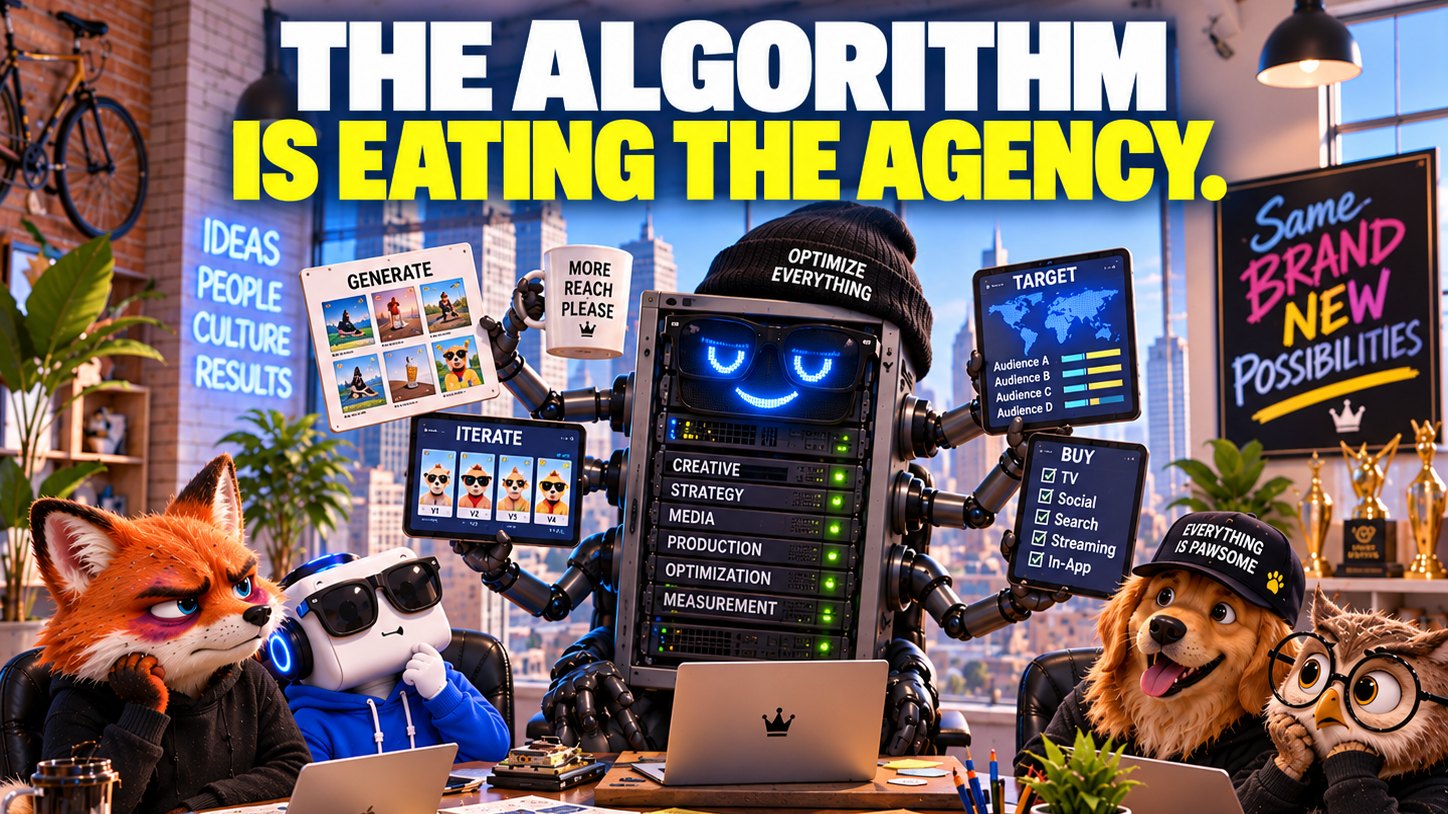
For years, ad tech got very good at one question: who should see this ad? This week added another: what ad should exist for that person when they see it? Targeting used to move much faster than production. You could identify ten audience segments, but somebody still had to make ten useful pieces of content. AI is removing that constraint. Creative generation, asset selection, campaign setup and media buying are moving into one loop. The response comes back, the system learns, the creative changes and another version goes out.
When one system can understand the audience, help make the work, decide who sees it, measure the response and generate the next version, calling it ad tech is a bit like calling Amazon a bookstore. Technically true, but missing most of the story.
Conversational AI knows what you want
OpenAI added more ad formats inside ChatGPT this week, along with the measurement advertisers need to tell whether those ads worked. That matters because ChatGPT is not a social feed. People use it to research, compare, plan and make decisions, and they explain what they are trying to do in complete sentences.
Google became valuable because search queries reveal intent. Meta became valuable because behavior reveals intent. Conversational AI goes further: people describe the problem itself. Meta's assistant can have even richer context if people give it access to their email, calendar and files. Meta has not connected that context to its advertising machine. But this is one of the largest advertising businesses in history, and we have seen how its privacy boundaries tend to move once there is a commercial reason for them to.
Agents buying from agents
On the TV side, the planning and buying work from NBCUniversal, FreeWheel and their partners is designed for agents to take part in the decisions, not just report on them afterwards. The advertiser has an agent deciding what to buy. The publisher has an agent deciding what to sell. Eventually the customer has an agent deciding what to purchase. At some point your AI will be negotiating with a brand's AI about which toothpaste you buy.
Creation, buying, distribution, optimization and measurement used to sit in different departments, agencies and companies. They are collapsing into one continuous system.
Brands inserted after the film is finished
The Omnicom and Rembrand technology scans finished streaming content and finds places where brands could be digitally inserted after the program has been made. It is clever, and for anyone who cares about what they produced, it is alarming.
When James Bond drinks a Heineken, that deal is approved by the production and the director before the bottle arrives on set. Now software can wander through a finished film thinking: lovely table, I could sell that. Does everyone see the same brand? Can my Coke be your Pepsi? Can a 20-year-old movie acquire a 2027 laptop? Does the director approve? Does the actor? And when is a film ever finished, if every play-out can change it?
That is why the training-ground debate is too small. The next Ridley Scott will be fine at making films. The question is how much power they will have against ad tech that can change their work during production, after production and on every play-out.
Where the value moves
The platforms already won distribution. They know the audience, own the feed and measure the response. Now they want to generate the creative, pick the asset, serve it, optimize it and feed the results back in. Clients will like a lot of this, because it is fast, measurable and personal. But it means the value for everyone else is probably not in volume, variations or optimization. The machine will win those. It moves back to the hard part: deciding what is actually worth making.
The first internet disruption moved power to distribution. This one is merging distribution and production into the same machine. So let's stop clutching pearls and get in the game, because creative companies are needed more than ever.
If you want help working out where your company fits in that loop, and setting the AI policy that goes with it, see our AI strategy and transformation work, or book a free discovery call.
This article is adapted from the October 12, 2026 Week in Review episode of Technically Creative.